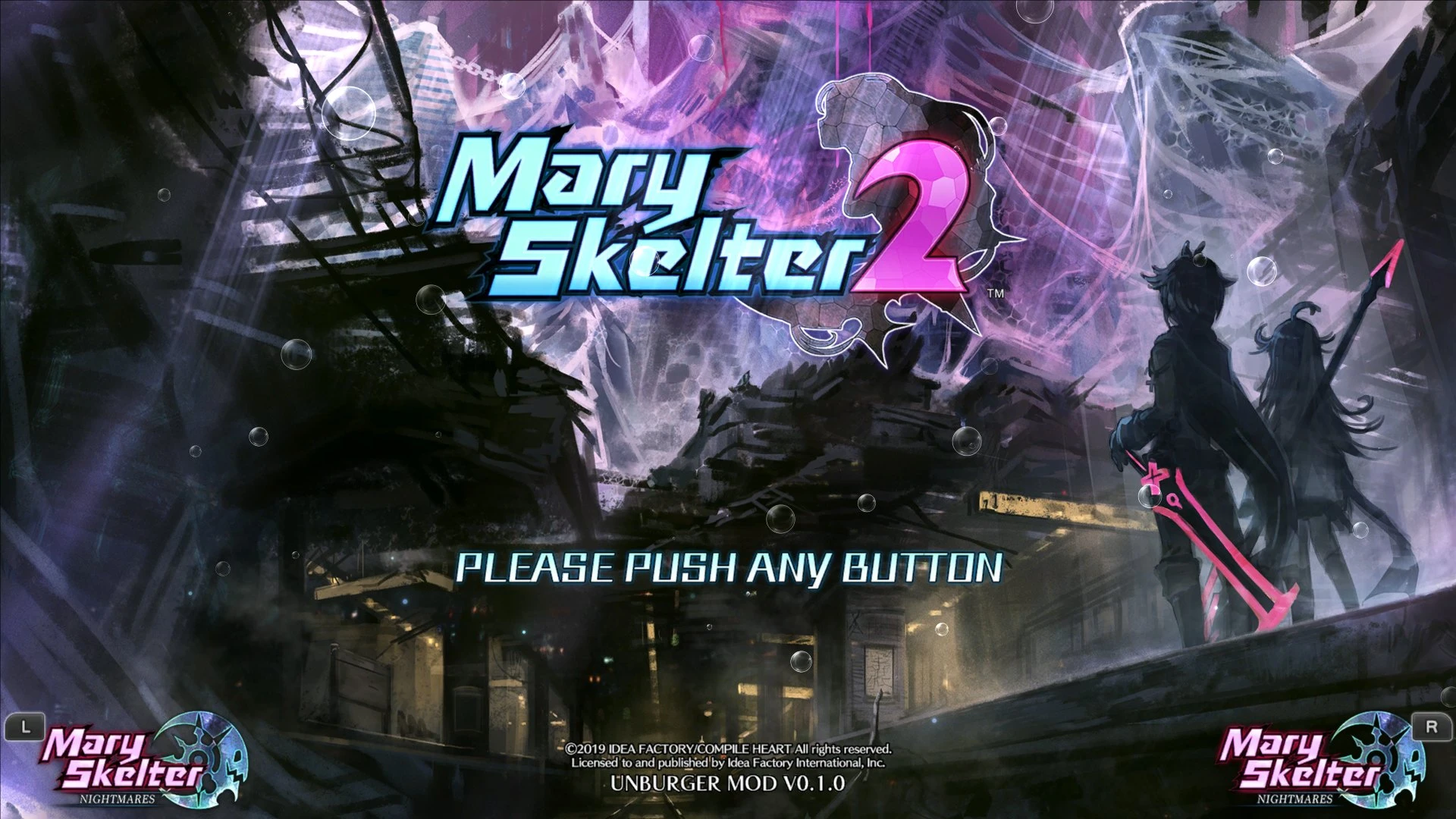
Mary Skelter 2 + Finale - English Translation & Restoration Patch
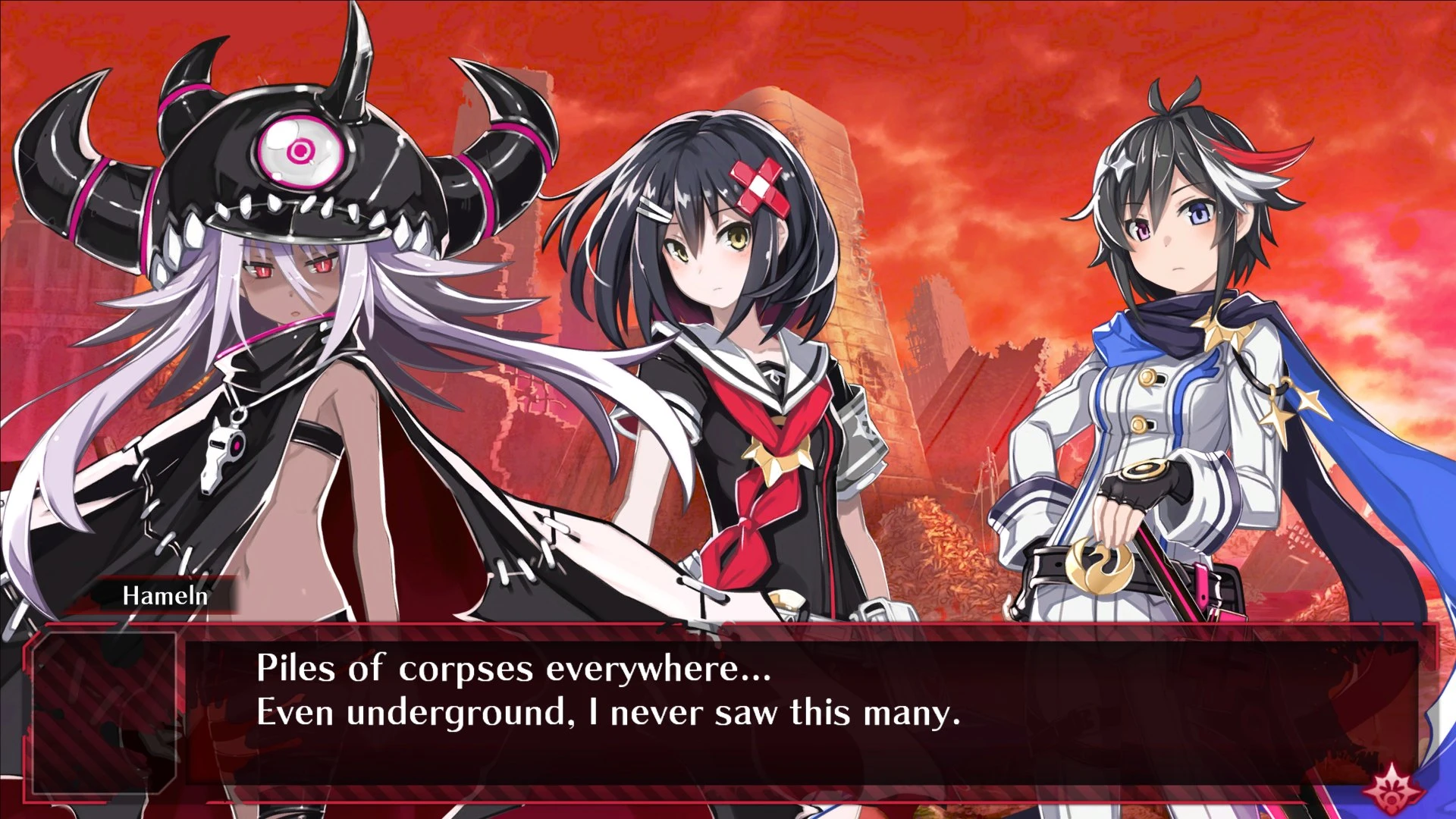
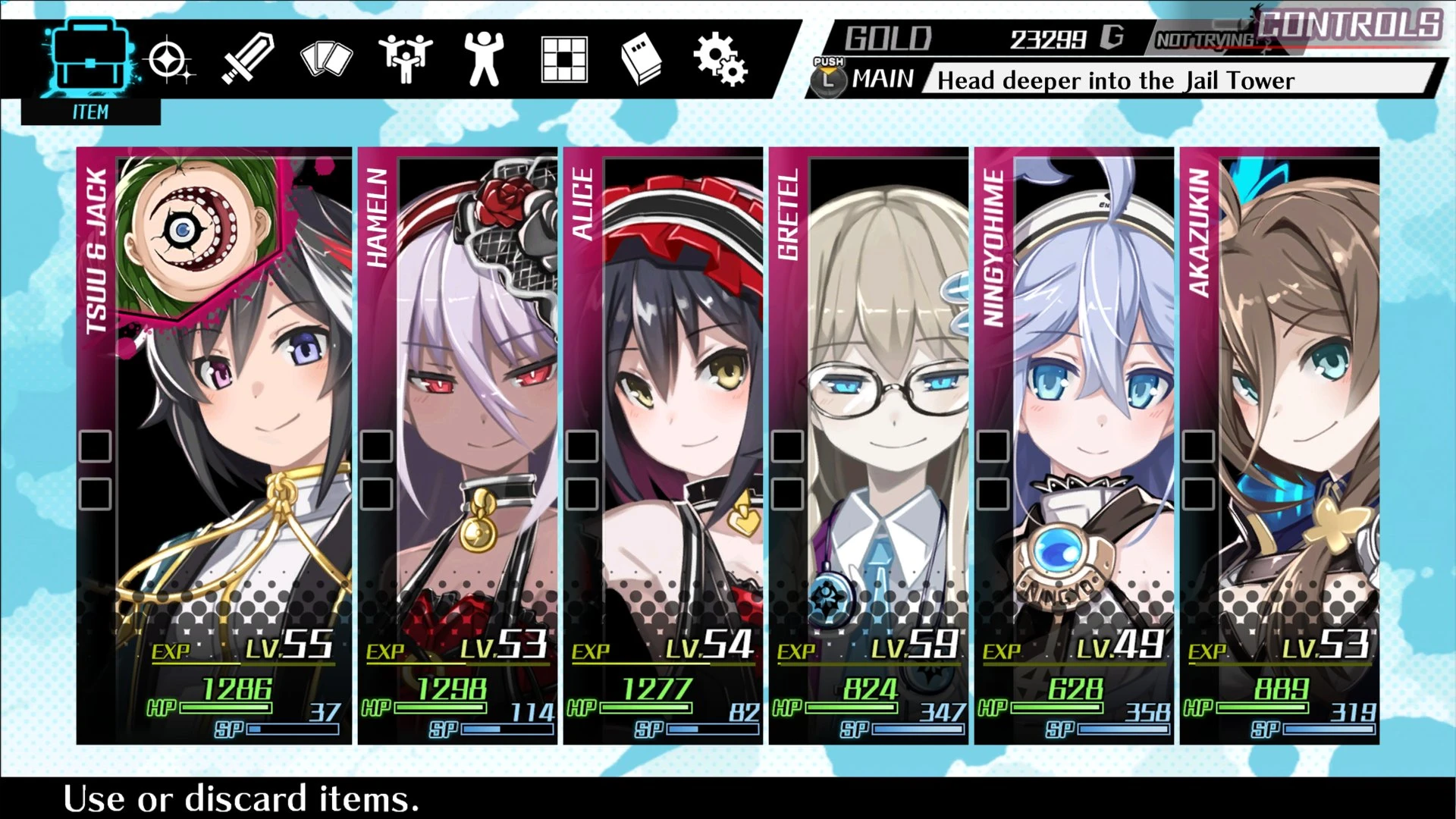
An English re-translation and restoration patch for the Western PC and Nintendo Switch releases of Mary Skelter 2 and Mary Skelter Finale. It also covers relevant material from the Mary Skelter: Nightmares remake included with Mary Skelter 2.
Why I made this patch
I started looking more closely at the English scripts after coming across some localization choices that seemed difficult to square with the Japanese dialogue. The renamed characters and abilities were obvious, as were the missing honorifics, but certain conversations were stranger. A line could sound perfectly plausible on its own and still be a poor fit for the scene once I checked what the character had actually said.
I soon had more than a list of names to restore. In Finale, for instance, a man agreeing to gather information because someone might have seen his missing wife was reduced to a generic expression of support. Elsewhere, an explicit warning about an irreversible game-over condition had been replaced with advice about using Corruption. I found characters reacting to implications that had disappeared from the preceding English dialogue, and character profiles that gave a surprisingly different account of relationships the games had already established. Some rewrites were almost comical when taken out of context. Others were frustrating precisely because nothing about the English sounded obviously wrong until I compared it with the source.
There was also the slower work of getting people's voices back. A hesitant reply might be made confrontational, a familiar nickname replaced with an ordinary name, or an older-sibling address quietly dropped. Reading one such line doesn't tell you much about the state of a localization. Reading a whole conversation in which those little choices keep piling up is a different experience, especially in games where the relationships between the characters carry so much of the story.
What began as a look at a handful of conspicuous changes gradually turned into a review of the player-facing English throughout both games. I ended up re-translating passages that had wandered a long way from the Japanese, fixing smaller errors where the existing sentence was otherwise sound, and leaving good official lines alone. I wanted someone playing in English to follow the same conversations and get to know the same characters, without having to fight through stiff, overly literal dialogue.
A few examples of what changed
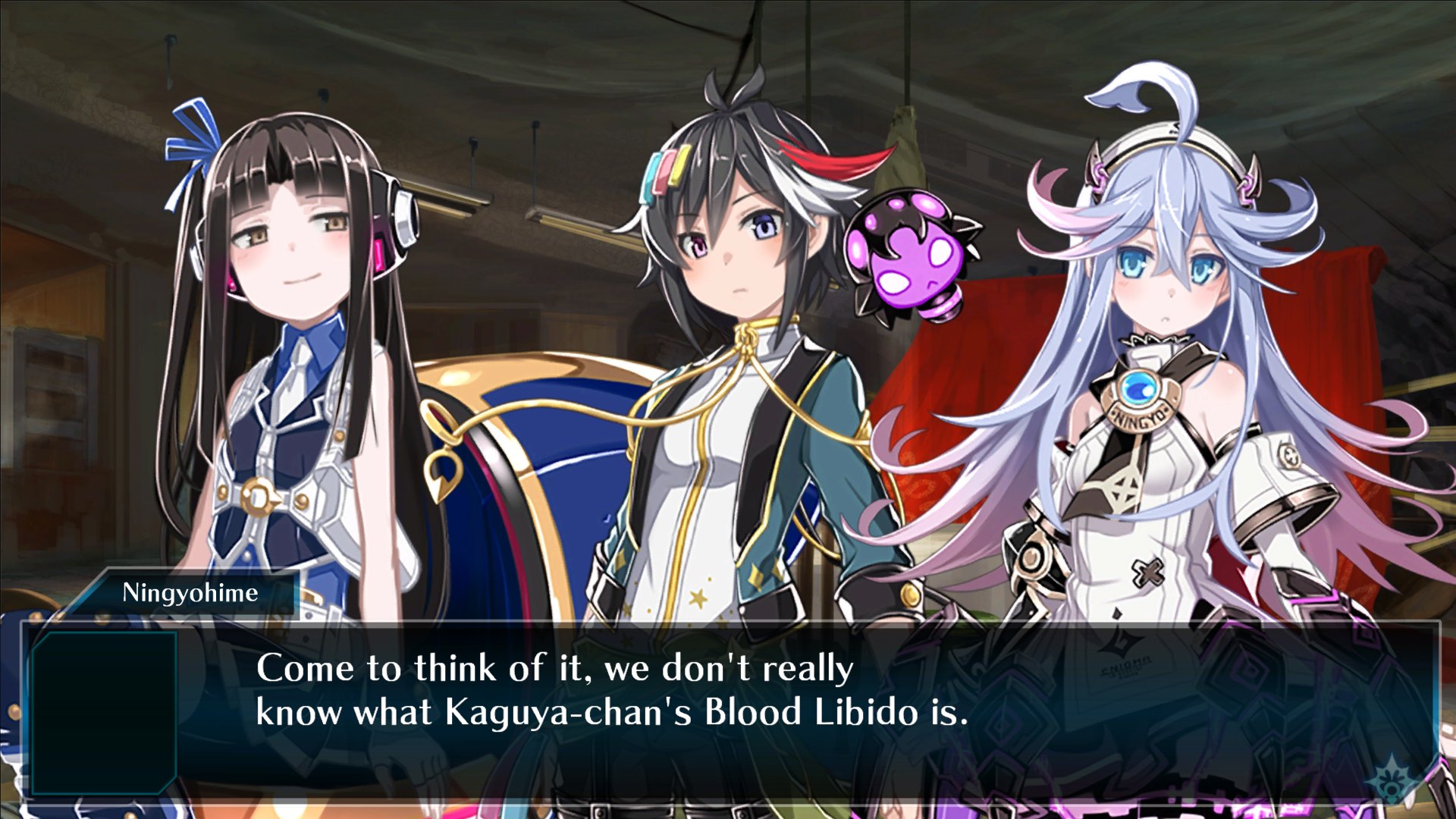
These are only a few examples to illustrate the kinds of changes I found while reviewing the scripts. I chose scenes where you can see the difference without knowing the whole game. They shouldn't be taken as a complete account of the work. The Japanese is reproduced from the source records, with its original line breaks. I've left the English wording as it appears in the corresponding translation fields. Some examples contain story spoilers.
Ningyohime and Tsuu's relationship. In Finale, Ningyohime's character profile recounts the marriage vows she and Tsuu exchanged and what happened when she faced her fate alongside Tsuu and Jack. The localized profile tells a different version of that history:
By the time the player reaches Finale, their relationship has already been explored at length. Reducing an exchange of marriage vows to a statement that Ningyohime is in love with Tsuu leaves out something the two of them have actually done, as well as the circumstances that brought them here.
Alice gets teased about Jack. Someone suggests that Alice and Jack make a good couple, and Alice is so flustered that she starts repeating the idea to herself. In the English release, she appears to have a much clearer answer:
Alice is too caught up in the suggestion to brush it off. The localization has her snap back immediately, losing the little moment where she imagines herself and Jack as a couple.
Yet another Jail Tower. In Finale, a character thinks about the prospect of dealing with another Jail Tower. The Japanese makes his disappointment quite plain. The official English gives him an almost supernatural attraction to the place:
He was weary of finding another tower - now he sounds fascinated by it. Since that reaction helps establish how he feels about his situation, it's a strange place to invent a different thought.
Juu is searching for his wife. When the group discusses gathering information, Juu has a particular reason to agree: somebody they meet might have seen his wife. The localization keeps his agreement and discards the reason for it:
The official line works as ordinary dialogue, which makes the missing detail easy to overlook. Juu's search gives the decision a personal weight that a polite 'Ready when you are' can't convey.
Mary's Blood Skelter warning. One of Finale's help messages explains that Mary cannot be brought back if she enters Blood Skelter and can no longer be purified. The message in the English release advises the player to do something else entirely:
These two messages would teach the player different rules. The Japanese is explaining when the game ends, so replacing it with a tip about Corruption is particularly hard to excuse.
Who raised Gretel? When Gretel talks about her childhood with Hansel in Mary Skelter 2, she describes him as the person who raised her. The official version makes them sound like siblings who simply grew up together:
That one verb carries a fair amount of their history. Hansel took responsibility for raising Gretel, and the localized dialogue leaves the player without that information.
Alice tries to comfort someone. Alice is speaking to someone who feels guilty about a girl entering Blood Skelter. In Japanese, she explains why holding back would have been impossible and tells her not to blame herself:
Alice is trying to ease someone's guilt. The official line sounds as though she's giving practical advice about staying alive, leaving out the reassurance that prompted her to speak.
Hameln's election dispute. Hameln complains that, for all her supposed strength, she feels as though she's been reset. Somehow that became a demand for an election recount:
I still don't know where the recount came from. It's a completely different joke, with no equivalent in Hameln's Japanese line.
Jack politely looks away. In Mary Skelter 2, Jack awkwardly asks someone to get dressed and promises to turn around while she does. The localized line retains the request but comes up with a reason of its own:
Jack is embarrassed and trying to give the other person some privacy. The complaint about his neck replaces a small, characteristic gesture with an unrelated gag.
I kept finding problems that were harder to demonstrate with a single quotation. A misplaced condition in a skill description, the wrong subject in a line of dialogue, or a change in how a character addresses someone can seem inconsequential when you look at it in isolation. There were enough of them, though, that correcting only the most outrageous rewrites would have left a lot of the original characterizatView attachment 42192ion and gameplay information missing.
The original names and the way characters use them
I restored the Japanese character names, including ones that have familiar fairy-tale equivalents in English. Those English names aren't difficult to understand, and I like knowing the stories behind the originals. The trouble comes when the characters actually talk to one another. They'll shorten a name, invent a nickname from it, add an honorific, or switch to a more affectionate form depending on whom they're addressing. Once you start translating the names independently of those spoken forms, the dialogue loses connections that were obvious in Japanese.
Here are the most familiar examples:
Akazukin can become Aka-nee or Aka-Aka. Shirayukihime is sometimes Shirayuki. Nemurihime becomes Nemu, Oyayubihime becomes Oyayubi, and Ningyohime becomes Ningyo. You hear these shorter names in the original performances, often with -chan, -san, -sama or an older-sister form attached. Using the Japanese names in the text makes the connection immediately recognizable, even when a character gets playful or affectionate with somebody else's name.
A few other names make the problem particularly clear:
Characters who already had familiar names in Japanese, such as Alice, Jack, Gretel, Hansel, Rapunzel and Cinderella, keep them. But Rapu, Rapu-chan and Gretel's Guree are worth preserving when those are the forms someone actually uses. There are similar distinctions throughout both scripts.
I kept the source's -san, -chan, -kun, -sama and older-sibling addresses such as onee-chan, onee-sama and nii-san. The choice of address often tells you how two characters see each other, and stripping it out can make their conversations feel strangely anonymous. I kept those distinctions while writing the surrounding lines as natural English, including using pronouns where repeating a name would sound forced.
View attachment 42193
Restored terminology
The English releases changed quite a few established terms and skill names as well. Here are some of the ones I restored, listed as Original localization → Revised translation (original Japanese). The Japanese spellings and the corrected names come from the game's translation records:
The three Mass.Blast entries are a good example of how confusing these changes could become: the localization used one English name for three distinct Japanese skills. I found other cases throughout job names, weapons, items and tutorials, including descriptions that confused Paralysis with Stun, described the wrong target for an ability, or turned a condition measured in actions into one measured in turns.
The work behind the graphics
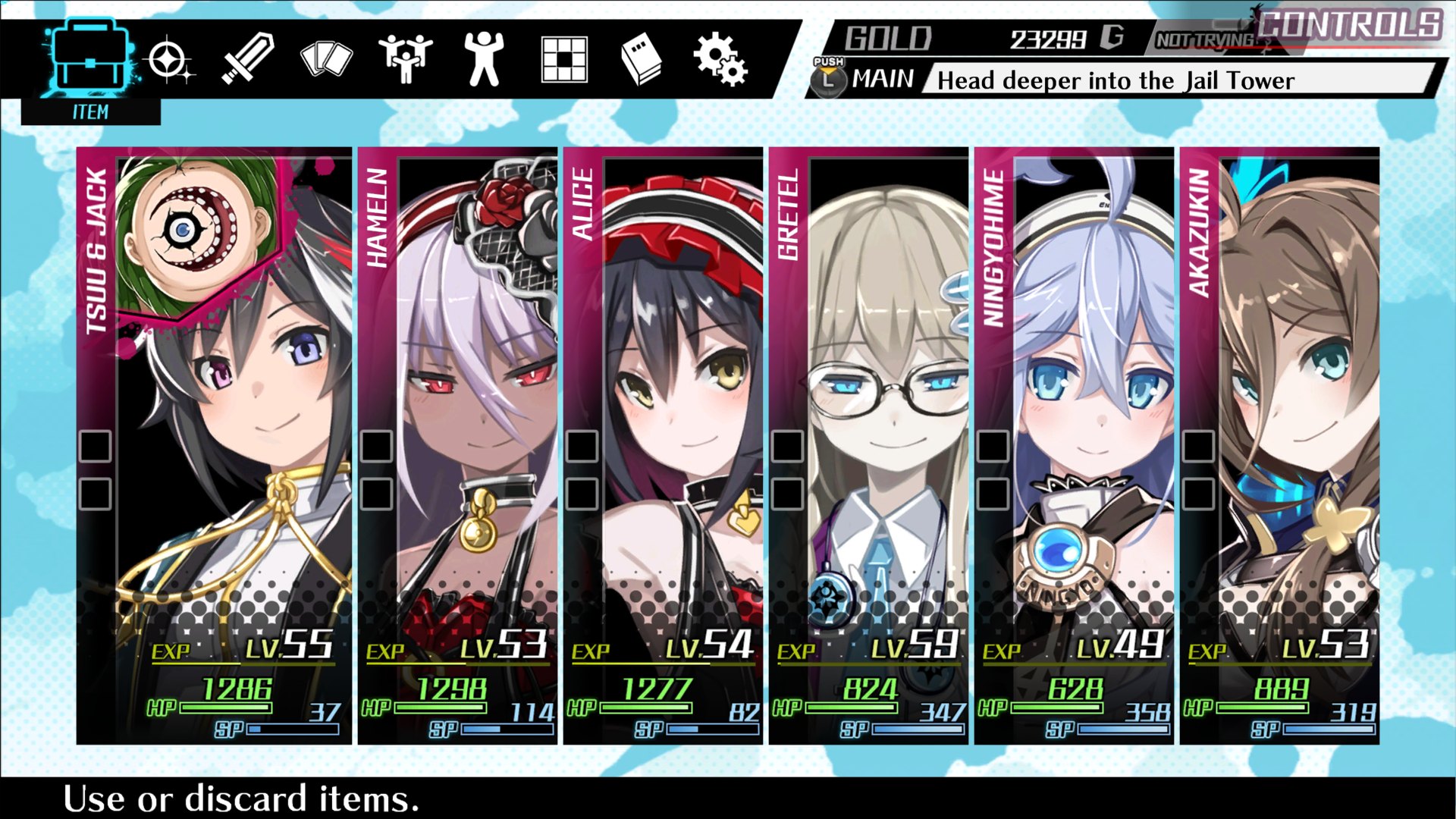
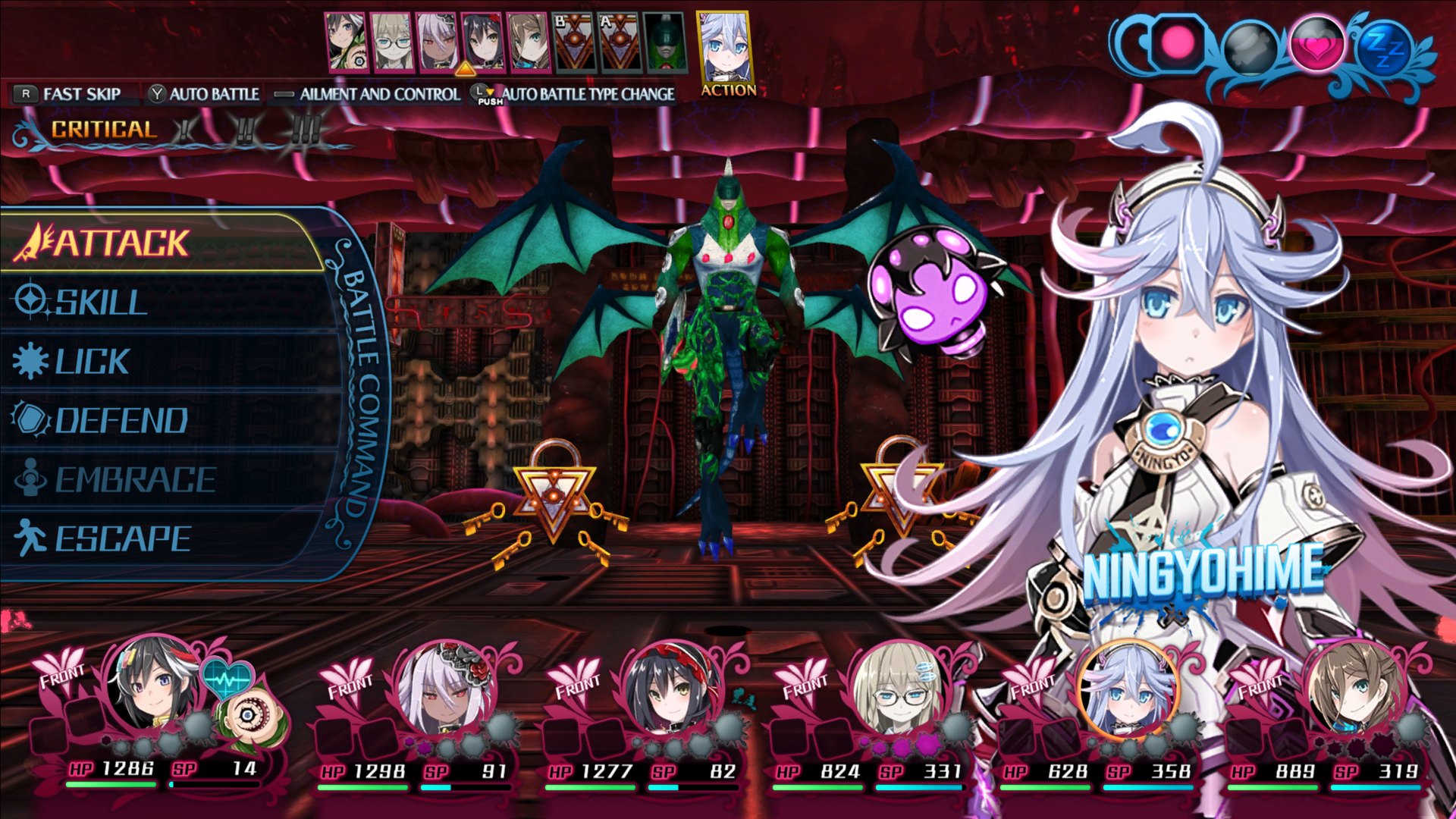
Both games make extensive use of pre-rendered images with text baked into the artwork. A character name that appears as editable dialogue in one scene may be a set of pixels in a texture atlas on another screen, complete with shadows, highlights and a decorative frame. Fixing the translation in a script leaves the old wording staring back at you from the menu or battle interface.
For those screens I had to work with the artwork itself. Sometimes that meant reconstructing the background behind the English letters before putting the Japanese name back - sometimes it meant recreating the lettering inside a very narrow space while keeping the original shadow, scale and transparency. A name that looks fine on its own can still clip at the edge of a selection box or leave stray pixels against the frame, so I spent time checking how these replacements behaved in their actual layouts.
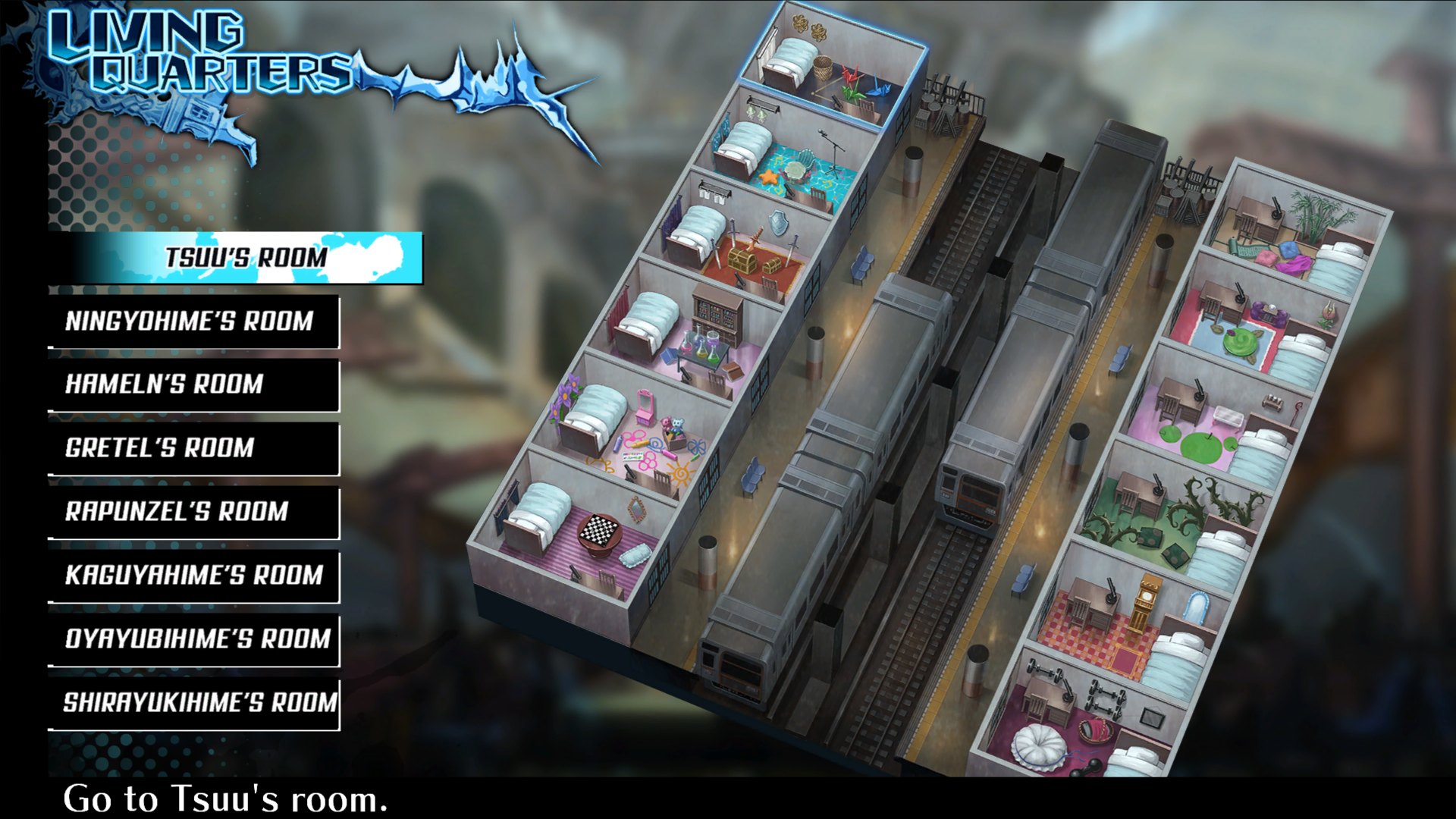
The same names appear in different styles and sizes across the two games: battle interfaces, results screens, camp menus, character rooms, job screens, equipment headers, bonus content and title-screen details. I ended up working through dozens of graphical targets alongside the text. The PC and Switch versions also require different archive and texture handling, so a corrected image still has to be repacked into the right place for each platform.
Working through those textures took far longer than I'd initially expected, especially with separate PC and Switch formats to deal with. It would have been easy to stop after changing the dialogue and leave the old names scattered across the interface, but those screens are part of what the player sees every time they play. I wanted the names and terms to remain consistent wherever they appeared.
Other improvements included in the patch
I also made several changes to the way the Western releases start and handle their original audio. These are included in the patch itself:
The PC installer detects supported game installations, checks the original files before changing them and provides a path to repair or update an already patched installation. The Switch packages contain the corresponding text, graphics and executable pat
 ches for their supported setups.
What the translation covers
I went through dialogue and player-facing text outside the main story too: character conversations, events, profiles, side material, quests, choices, battle messages, jobs, skills, item and equipment names, descriptions, tutorials, menus and system messages. The corresponding material from the Mary Skelter: Nightmares remake included with Mary Skelter 2 was part of the work as well.
The PC and Switch editions use the same corrected translation data, with the text adapted to the technical record formats of each release. I wanted to avoid a name appearing one way on PC and another way on Switch, particularly when both versions use the same original voices.
As in my other translation projects, I left official English alone wherever it was already accurate and sounded right for the scene. Some lines only needed a small correction - others needed to be written again from the Japanese. I was interested in getting the dialogue right, not in changing words just to have another edit to count.
Current status
The PC and Switch release packages have been built, and my initial testing across both games and the available variants has gone well. I haven't checked every combination of scene, ending, menu and graphical element in-game, so there may still be a typo, a layout issue or a line whose meaning needs another look.
If you find a problem, please tell me which game and platform you're playing and where it happened - a screenshot or a little surrounding dialogue is particularly helpful. I can then find the relevant record and fix it without needlessly changing neighboring lines.
Think of this as a beta version. The translation has been reviewed, corrected, and is essentially complete, but that doesn't mean this is the final version. Many lines may still sound a bit stiff, and there may be some minor errors, typos, etc.
Installation
PC - Windows or Linux
The PC release supports the Western PC versions of Mary Skelter 2 and Mary Skelter Finale. You need your own supported game installation.
You can patch either game separately. The PC release includes the Windows and Linux installers and the patch data they need. You don't need Go or a system Python installation to use the finished release.
Nintendo Switch / Eden
Use the Atmosphere ZIP for the corresponding Switch mod layout or the Eden ZIP for the supported emulator layout. Extract it into the relevant mod location while preserving the directory structure in the archive.
The Switch packages combine the revised English script, graphical replacements and the required executable patches. Use the package that matches your setup and the supported Western version of the game.
Building from source
The source repository contains the translation records, graphics resources and build tools. It doesn't include the original game archives, so you'll need the files from your own copies of the games.
Start the maintainer builder with ./build.sh on Linux or build.bat on Windows. It provides an interactive workflow for preparing sources and building the PC and Switch releases. The build toolchain uses a pinned Python runtime for raster work and Go for the surrounding build and packaging tools - it is set up to restore the bundled runtime rather than relying on an arbitrary system Python installation.
Credits
This is an unofficial fan translation and restoration patch. Thanks to everyone who helped document the original scripts, identify localization issues, test the games, and develop the tools used to build the releases.
You'll need your own copies of the supported games. The release packages don't contain the original game archives.
An English re-translation and restoration patch for the Western PC and Nintendo Switch releases of Mary Skelter 2 and Mary Skelter Finale. It also covers relevant material from the Mary Skelter: Nightmares remake included with Mary Skelter 2.
Why I made this patch
I started looking more closely at the English scripts after coming across some localization choices that seemed difficult to square with the Japanese dialogue. The renamed characters and abilities were obvious, as were the missing honorifics, but certain conversations were stranger. A line could sound perfectly plausible on its own and still be a poor fit for the scene once I checked what the character had actually said.
I soon had more than a list of names to restore. In Finale, for instance, a man agreeing to gather information because someone might have seen his missing wife was reduced to a generic expression of support. Elsewhere, an explicit warning about an irreversible game-over condition had been replaced with advice about using Corruption. I found characters reacting to implications that had disappeared from the preceding English dialogue, and character profiles that gave a surprisingly different account of relationships the games had already established. Some rewrites were almost comical when taken out of context. Others were frustrating precisely because nothing about the English sounded obviously wrong until I compared it with the source.
There was also the slower work of getting people's voices back. A hesitant reply might be made confrontational, a familiar nickname replaced with an ordinary name, or an older-sibling address quietly dropped. Reading one such line doesn't tell you much about the state of a localization. Reading a whole conversation in which those little choices keep piling up is a different experience, especially in games where the relationships between the characters carry so much of the story.
What began as a look at a handful of conspicuous changes gradually turned into a review of the player-facing English throughout both games. I ended up re-translating passages that had wandered a long way from the Japanese, fixing smaller errors where the existing sentence was otherwise sound, and leaving good official lines alone. I wanted someone playing in English to follow the same conversations and get to know the same characters, without having to fight through stiff, overly literal dialogue.
A few examples of what changed
These are only a few examples to illustrate the kinds of changes I found while reviewing the scripts. I chose scenes where you can see the difference without knowing the whole game. They shouldn't be taken as a complete account of the work. The Japanese is reproduced from the source records, with its original line breaks. I've left the English wording as it appears in the corresponding translation fields. Some examples contain story spoilers.
Ningyohime and Tsuu's relationship. In Finale, Ningyohime's character profile recounts the marriage vows she and Tsuu exchanged and what happened when she faced her fate alongside Tsuu and Jack. The localized profile tells a different version of that history:
By the time the player reaches Finale, their relationship has already been explored at length. Reducing an exchange of marriage vows to a statement that Ningyohime is in love with Tsuu leaves out something the two of them have actually done, as well as the circumstances that brought them here.
Alice gets teased about Jack. Someone suggests that Alice and Jack make a good couple, and Alice is so flustered that she starts repeating the idea to herself. In the English release, she appears to have a much clearer answer:
Alice is too caught up in the suggestion to brush it off. The localization has her snap back immediately, losing the little moment where she imagines herself and Jack as a couple.
Yet another Jail Tower. In Finale, a character thinks about the prospect of dealing with another Jail Tower. The Japanese makes his disappointment quite plain. The official English gives him an almost supernatural attraction to the place:
He was weary of finding another tower - now he sounds fascinated by it. Since that reaction helps establish how he feels about his situation, it's a strange place to invent a different thought.
Juu is searching for his wife. When the group discusses gathering information, Juu has a particular reason to agree: somebody they meet might have seen his wife. The localization keeps his agreement and discards the reason for it:
The official line works as ordinary dialogue, which makes the missing detail easy to overlook. Juu's search gives the decision a personal weight that a polite 'Ready when you are' can't convey.
Mary's Blood Skelter warning. One of Finale's help messages explains that Mary cannot be brought back if she enters Blood Skelter and can no longer be purified. The message in the English release advises the player to do something else entirely:
These two messages would teach the player different rules. The Japanese is explaining when the game ends, so replacing it with a tip about Corruption is particularly hard to excuse.
Who raised Gretel? When Gretel talks about her childhood with Hansel in Mary Skelter 2, she describes him as the person who raised her. The official version makes them sound like siblings who simply grew up together:
That one verb carries a fair amount of their history. Hansel took responsibility for raising Gretel, and the localized dialogue leaves the player without that information.
Alice tries to comfort someone. Alice is speaking to someone who feels guilty about a girl entering Blood Skelter. In Japanese, she explains why holding back would have been impossible and tells her not to blame herself:
Alice is trying to ease someone's guilt. The official line sounds as though she's giving practical advice about staying alive, leaving out the reassurance that prompted her to speak.
Hameln's election dispute. Hameln complains that, for all her supposed strength, she feels as though she's been reset. Somehow that became a demand for an election recount:
I still don't know where the recount came from. It's a completely different joke, with no equivalent in Hameln's Japanese line.
Jack politely looks away. In Mary Skelter 2, Jack awkwardly asks someone to get dressed and promises to turn around while she does. The localized line retains the request but comes up with a reason of its own:
Jack is embarrassed and trying to give the other person some privacy. The complaint about his neck replaces a small, characteristic gesture with an unrelated gag.
I kept finding problems that were harder to demonstrate with a single quotation. A misplaced condition in a skill description, the wrong subject in a line of dialogue, or a change in how a character addresses someone can seem inconsequential when you look at it in isolation. There were enough of them, though, that correcting only the most outrageous rewrites would have left a lot of the original characterizatView attachment 42192ion and gameplay information missing.
The original names and the way characters use them
I restored the Japanese character names, including ones that have familiar fairy-tale equivalents in English. Those English names aren't difficult to understand, and I like knowing the stories behind the originals. The trouble comes when the characters actually talk to one another. They'll shorten a name, invent a nickname from it, add an honorific, or switch to a more affectionate form depending on whom they're addressing. Once you start translating the names independently of those spoken forms, the dialogue loses connections that were obvious in Japanese.
Here are the most familiar examples:
- Akazukin (赤ずきん) — Little Red Riding Hood, literally red hood.
- Oyayubihime (親指姫) — Thumbelina, literally thumb princess.
- Shirayukihime (白雪姫) — Snow White, literally white-snow princess.
- Nemurihime (眠り姫) — Sleeping Beauty, literally sleeping princess.
- Kaguyahime (かぐや姫) — Princess Kaguya - Kaguya is her name and -hime means princess.
- Ningyohime (人魚姫) — The Little Mermaid, literally mermaid princess.
Akazukin can become Aka-nee or Aka-Aka. Shirayukihime is sometimes Shirayuki. Nemurihime becomes Nemu, Oyayubihime becomes Oyayubi, and Ningyohime becomes Ningyo. You hear these shorter names in the original performances, often with -chan, -san, -sama or an older-sister form attached. Using the Japanese names in the text makes the connection immediately recognizable, even when a character gets playful or affectionate with somebody else's name.
A few other names make the problem particularly clear:
- Tsuu (つう) and Otsuu (おつう) both appear in Japanese. The choice depends on who's speaking. Her connection to the Japanese crane tale is also worth keeping in mind. Hiaburibashira (火あぶり柱) means a burning stake*. Her nickname is Shira. The localized Pyre and Pi obscure the link between the full name and the shorter one. Her name is even deliberately mispronounced in some conversations. Kubitsuridai (首吊り台) refers to the gallows, or a hanging platform*. Her name, its shortened forms and the ways other characters address her belong to the same system.
- Juu (ジュウ) was localized as Toh. His name's reading becomes important later in Finale, so I'll leave the story implications alone.
Characters who already had familiar names in Japanese, such as Alice, Jack, Gretel, Hansel, Rapunzel and Cinderella, keep them. But Rapu, Rapu-chan and Gretel's Guree are worth preserving when those are the forms someone actually uses. There are similar distinctions throughout both scripts.
I kept the source's -san, -chan, -kun, -sama and older-sibling addresses such as onee-chan, onee-sama and nii-san. The choice of address often tells you how two characters see each other, and stripping it out can make their conversations feel strangely anonymous. I kept those distinctions while writing the surrounding lines as natural English, including using pronouns where repeating a name would sound forced.
View attachment 42193
Restored terminology
The English releases changed quite a few established terms and skill names as well. Here are some of the ones I restored, listed as Original localization → Revised translation (original Japanese). The Japanese spellings and the corrected names come from the game's translation records:
- Massacre Mode → Genocide Mode (ジェノサイドモード)
- Massacre Pink → Genocide Pink (処刑台少女 - the established group name)
- Jail Trial → TriJail (トライジェイル)
- Insectmare → Babymare (ベイビメア)
- Rabbit Hole → Wonder Hole (ワンダーホール)
- Hair Flair → Hair! (ヘアー!)
- Phantomize → Air Human (エアーヒューマン)
- Mass.Blast → Genocide Buster (ジェノサイドバスター)
- Mass.Blast → Geno Amos Blast (ジェノアモスブラスト)
- Mass.Blast → Amos Blast (アモスブラスト)
- Mass.Swipe → Genocide Slash (ジェノサイドスラッシュ)
- Mary Gun Enhanced → Mary Gun Reverser (メアリガンリバーサー)
- Licard Island → Leichhardt Island (ライカード島)
- Toh → Juu (ジュウ)
- Pyre → Shira / Hiaburibashira (シラ / 火あぶり柱, according to the spoken form)
The three Mass.Blast entries are a good example of how confusing these changes could become: the localization used one English name for three distinct Japanese skills. I found other cases throughout job names, weapons, items and tutorials, including descriptions that confused Paralysis with Stun, described the wrong target for an ability, or turned a condition measured in actions into one measured in turns.
The work behind the graphics
Both games make extensive use of pre-rendered images with text baked into the artwork. A character name that appears as editable dialogue in one scene may be a set of pixels in a texture atlas on another screen, complete with shadows, highlights and a decorative frame. Fixing the translation in a script leaves the old wording staring back at you from the menu or battle interface.
For those screens I had to work with the artwork itself. Sometimes that meant reconstructing the background behind the English letters before putting the Japanese name back - sometimes it meant recreating the lettering inside a very narrow space while keeping the original shadow, scale and transparency. A name that looks fine on its own can still clip at the edge of a selection box or leave stray pixels against the frame, so I spent time checking how these replacements behaved in their actual layouts.
The same names appear in different styles and sizes across the two games: battle interfaces, results screens, camp menus, character rooms, job screens, equipment headers, bonus content and title-screen details. I ended up working through dozens of graphical targets alongside the text. The PC and Switch versions also require different archive and texture handling, so a corrected image still has to be repacked into the right place for each platform.
Working through those textures took far longer than I'd initially expected, especially with separate PC and Switch formats to deal with. It would have been easy to stop after changing the dialogue and leave the old names scattered across the interface, but those screens are part of what the player sees every time they play. I wanted the names and terms to remain consistent wherever they appeared.
Other improvements included in the patch
I also made several changes to the way the Western releases start and handle their original audio. These are included in the patch itself:
- Original voices are selected automatically. The games use the original Japanese performances rather than switching back to the English voice tracks.
- Startup logos are skipped, so you can get into the game without sitting through the same opening logo sequence each time.
- Mary Skelter 2 skips the voice-language selection window at startup. The original voices are selected straight away, so you no longer have to answer that prompt every time you launch the game.
- On PC, the installer creates Minigame.dat if it is missing, enabling the uncensored version. An existing file is left alone.
- On PC, you can remove the unused English voice assets to reclaim disk space. This is an installer option covering the verified English voice archives and, for Mary Skelter 2, the redundant English-voice movie files. Removed assets are not backed up by that cleanup option, so keep them if you want to be able to switch back without restoring game files.
- Finale's PC movie audio is handled too. Where the Western release's movie soundtrack differs from the Japanese version, the patch can restore the original audio without making the user prepare a separate movie pack.
The PC installer detects supported game installations, checks the original files before changing them and provides a path to repair or update an already patched installation. The Switch packages contain the corresponding text, graphics and executable pat
What the translation covers
I went through dialogue and player-facing text outside the main story too: character conversations, events, profiles, side material, quests, choices, battle messages, jobs, skills, item and equipment names, descriptions, tutorials, menus and system messages. The corresponding material from the Mary Skelter: Nightmares remake included with Mary Skelter 2 was part of the work as well.
The PC and Switch editions use the same corrected translation data, with the text adapted to the technical record formats of each release. I wanted to avoid a name appearing one way on PC and another way on Switch, particularly when both versions use the same original voices.
As in my other translation projects, I left official English alone wherever it was already accurate and sounded right for the scene. Some lines only needed a small correction - others needed to be written again from the Japanese. I was interested in getting the dialogue right, not in changing words just to have another edit to count.
Current status
The PC and Switch release packages have been built, and my initial testing across both games and the available variants has gone well. I haven't checked every combination of scene, ending, menu and graphical element in-game, so there may still be a typo, a layout issue or a line whose meaning needs another look.
If you find a problem, please tell me which game and platform you're playing and where it happened - a screenshot or a little surrounding dialogue is particularly helpful. I can then find the relevant record and fix it without needlessly changing neighboring lines.
Think of this as a beta version. The translation has been reviewed, corrected, and is essentially complete, but that doesn't mean this is the final version. Many lines may still sound a bit stiff, and there may be some minor errors, typos, etc.
Installation
PC - Windows or Linux
The PC release supports the Western PC versions of Mary Skelter 2 and Mary Skelter Finale. You need your own supported game installation.
- Extract the PC release ZIP into a folder of your choice. Keep all extracted files together, including the patch-data container.
- Run run.bat on Windows or ./run.sh on Linux.
- Select the game and confirm its installation directory. The installer checks the game files and guides you through the patching process.
- Choose whether to keep the English voice files or remove the verified unused assets to save space.
You can patch either game separately. The PC release includes the Windows and Linux installers and the patch data they need. You don't need Go or a system Python installation to use the finished release.
Nintendo Switch / Eden
Use the Atmosphere ZIP for the corresponding Switch mod layout or the Eden ZIP for the supported emulator layout. Extract it into the relevant mod location while preserving the directory structure in the archive.
The Switch packages combine the revised English script, graphical replacements and the required executable patches. Use the package that matches your setup and the supported Western version of the game.
Building from source
The source repository contains the translation records, graphics resources and build tools. It doesn't include the original game archives, so you'll need the files from your own copies of the games.
Start the maintainer builder with ./build.sh on Linux or build.bat on Windows. It provides an interactive workflow for preparing sources and building the PC and Switch releases. The build toolchain uses a pinned Python runtime for raster work and Go for the surrounding build and packaging tools - it is set up to restore the bundled runtime rather than relying on an arbitrary system Python installation.
Credits
This is an unofficial fan translation and restoration patch. Thanks to everyone who helped document the original scripts, identify localization issues, test the games, and develop the tools used to build the releases.
You'll need your own copies of the supported games. The release packages don't contain the original game archives.