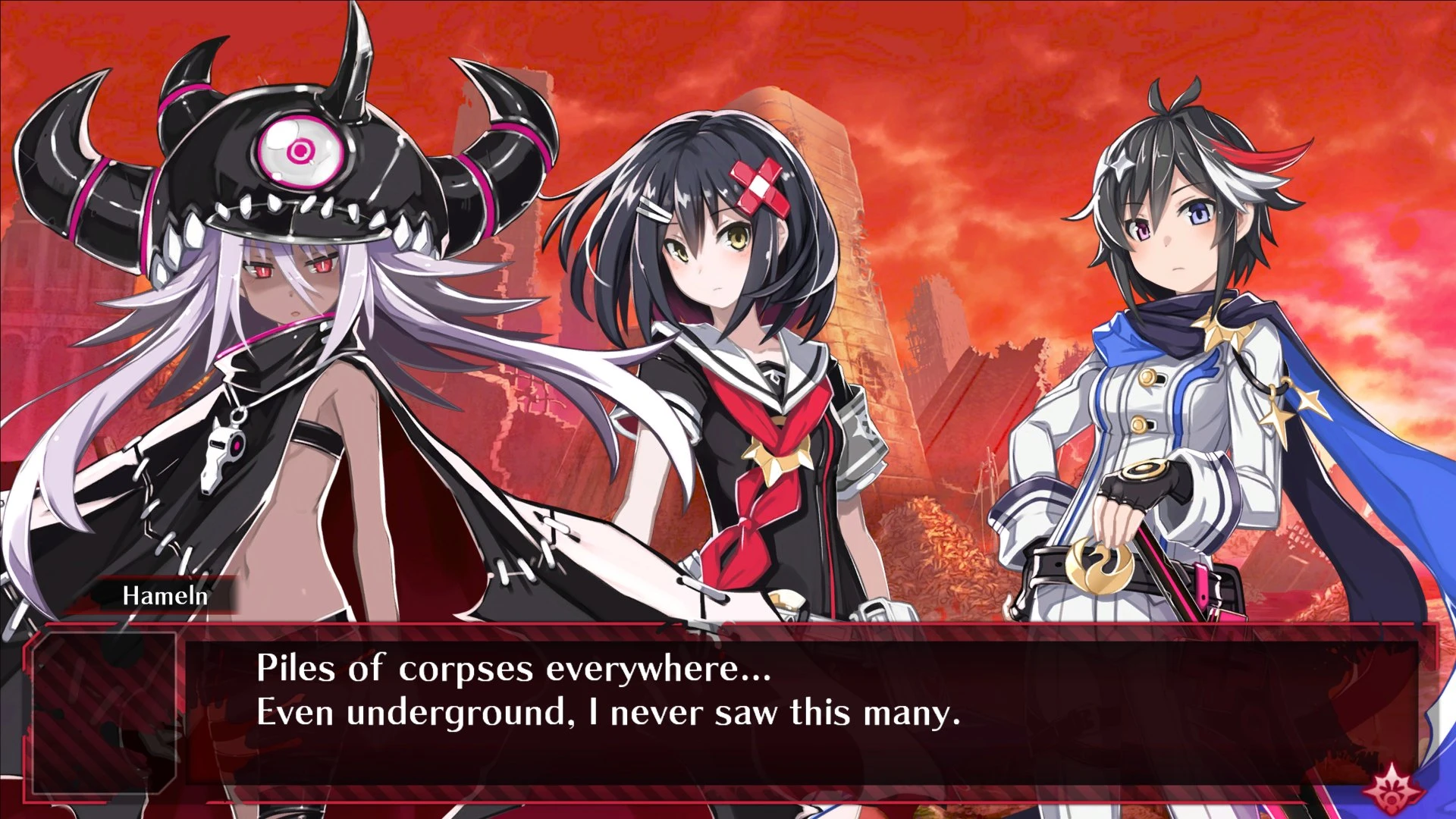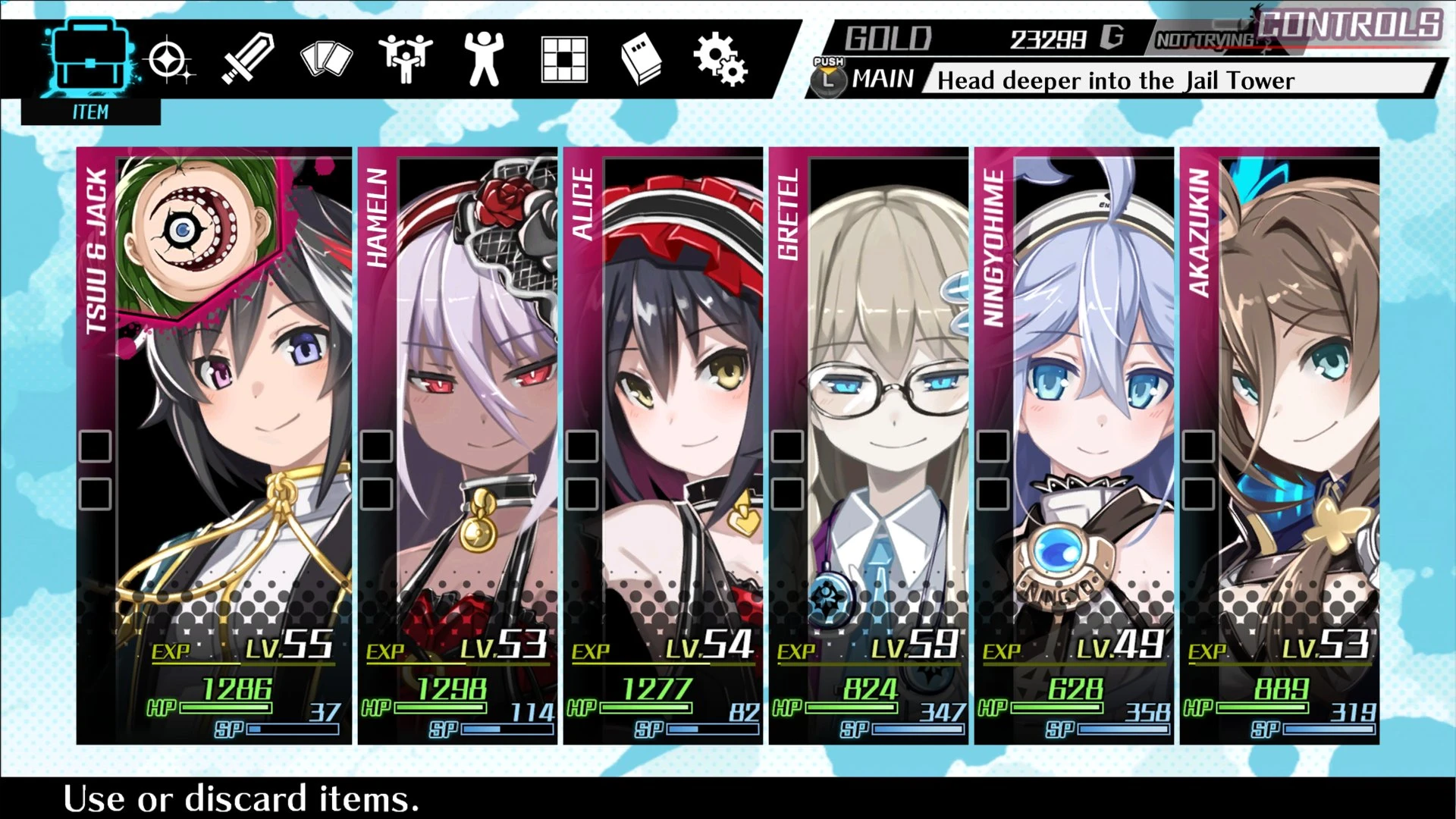
About the Patch
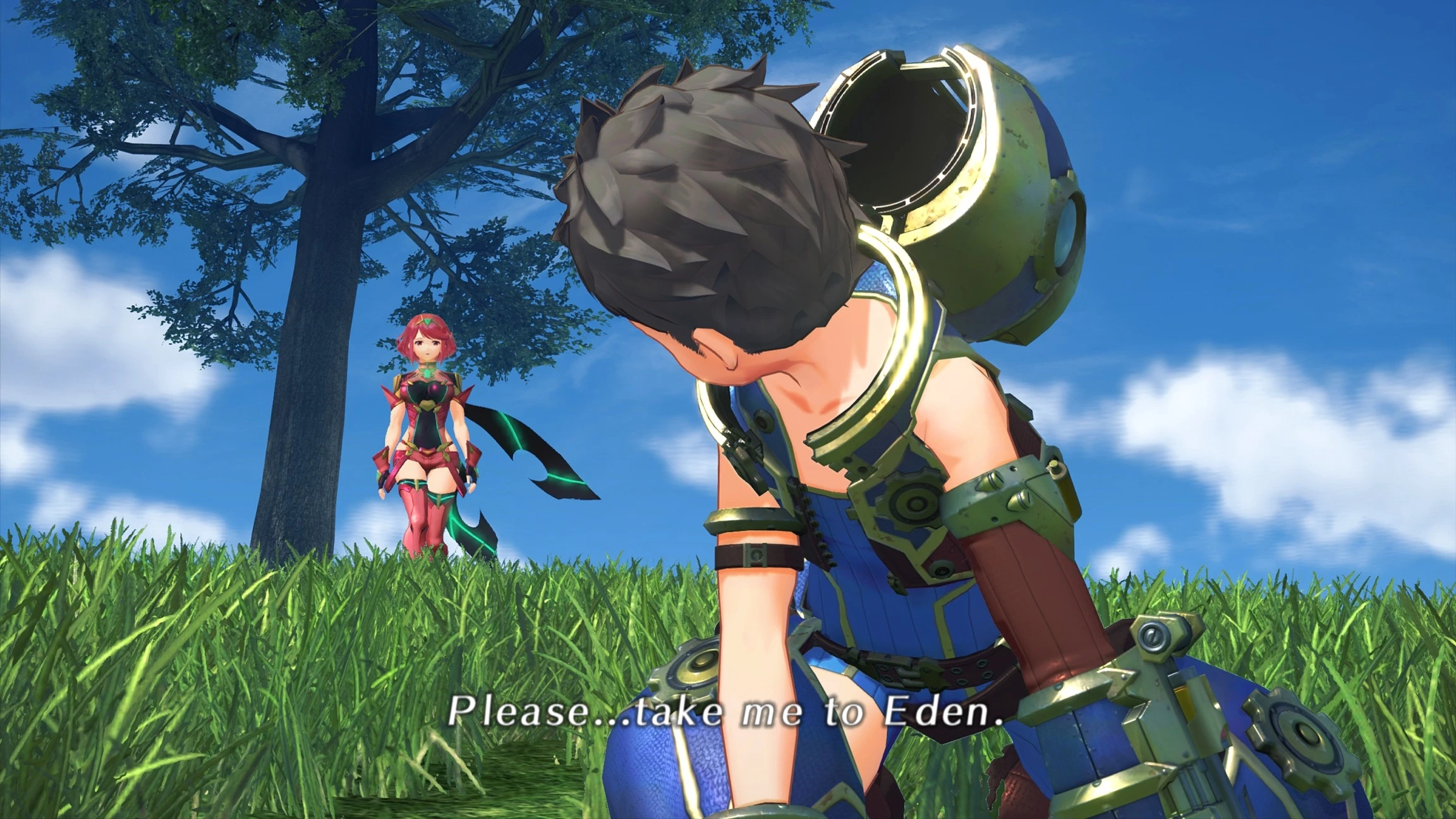
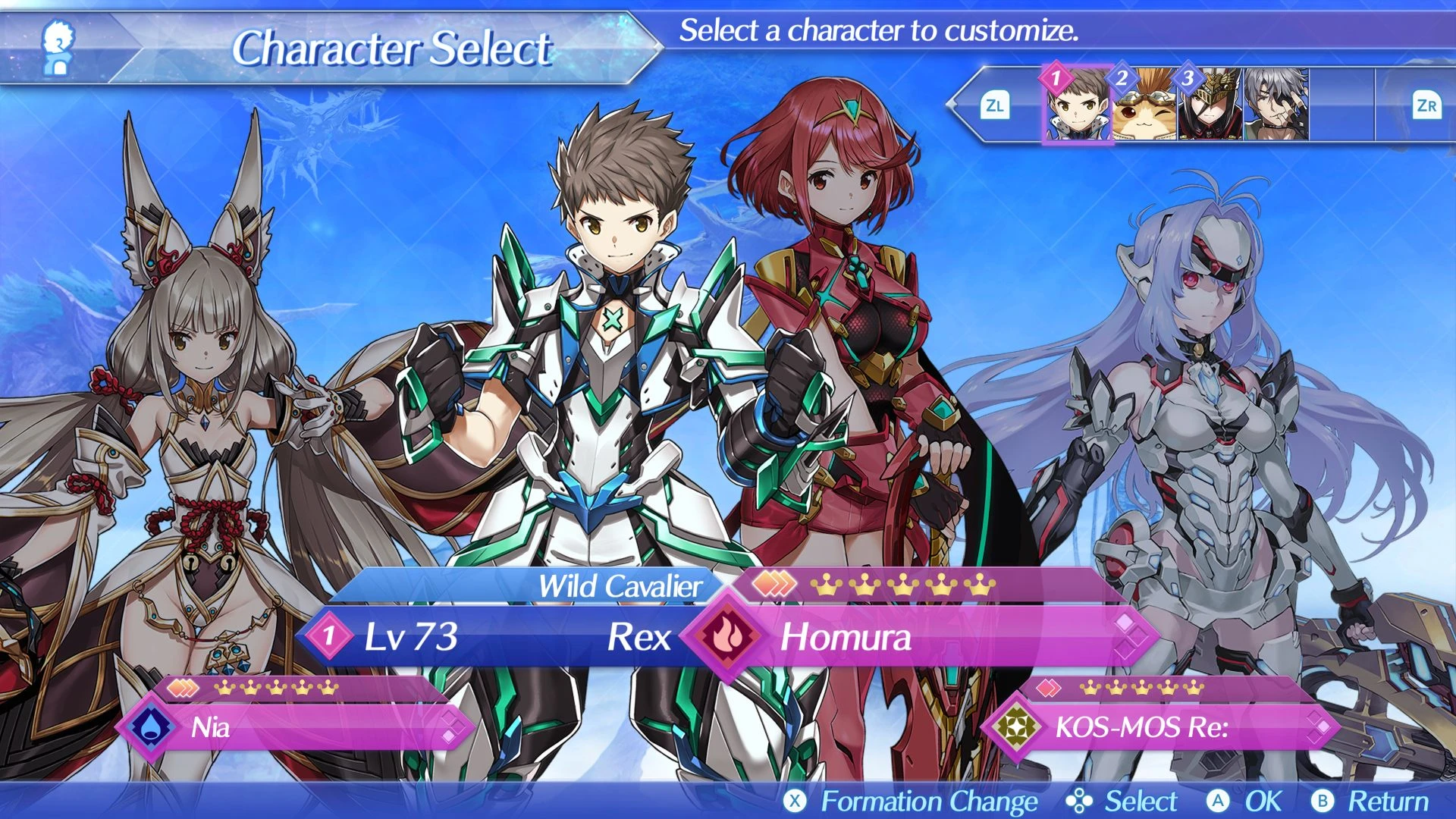
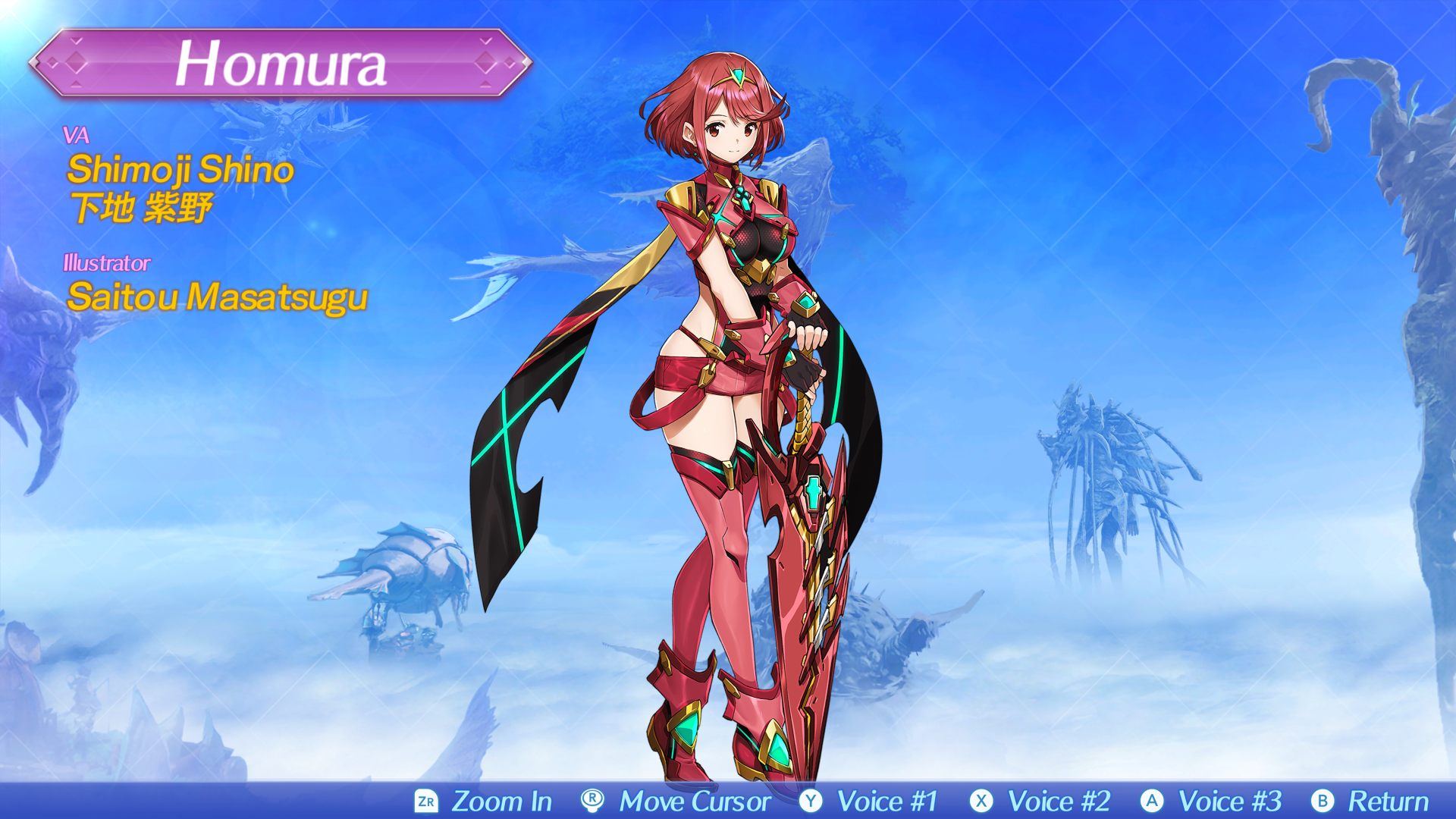
This patch brings the English version of Xenoblade 2 much closer to the original Japanese game. It restores names and terminology, corrects mistranslated or rewritten dialogue, preserves honorifics and cultural references, and removes localization changes that altered characterization, lore, jokes, terminology or the meaning of the original text.
The work now covers the main story, Iira, regular and mini quests, Blade Quests, Bonding Talks, inn scenes, field and NPC dialogue, tutorials, battle and system text, character and NPC names, enemy names, locations, weapons, attacks, skills, items and many other parts of the game.
Changes can be followed through the project's GitHub commits and release changelogs.
The technical side, however, was considerably more complicated.
The western Switch 1 release didn't include Japanese, which left an unused language slot that made replacing BDAT files through LayeredFS relatively straightforward. The Switch 2 Edition includes Japanese from the start, and the game prioritizes the BDAT files stored inside its own archives. Simply placing translated files in the Japanese language folder no longer works.
Getting around this required reverse-engineering the game's file-loading routines and developing an IPS patch that redirects Japanese BDAT requests to a separate folder in LayeredFS. If a replacement file isn't present, the game falls back to its original data.
The downside is that this modification is tied to the game's executable, meaning future updates will require a corresponding IPS patch. Unlike the Switch 1 version, the translation files alone aren't enough. But there's also a positive side - the game includes a Japanese video for the ending cutscene, which was missing from the Western version of Switch 1. Because of this, you don't need to copy it separately into the patch folder.
Switch 2 emulation is also still highly experimental, so I haven't been able to test every part of the game. I've tested the patch as extensively as the current emulators allow, though, and everything I've been able to check has worked as intended.
Core Philosophy
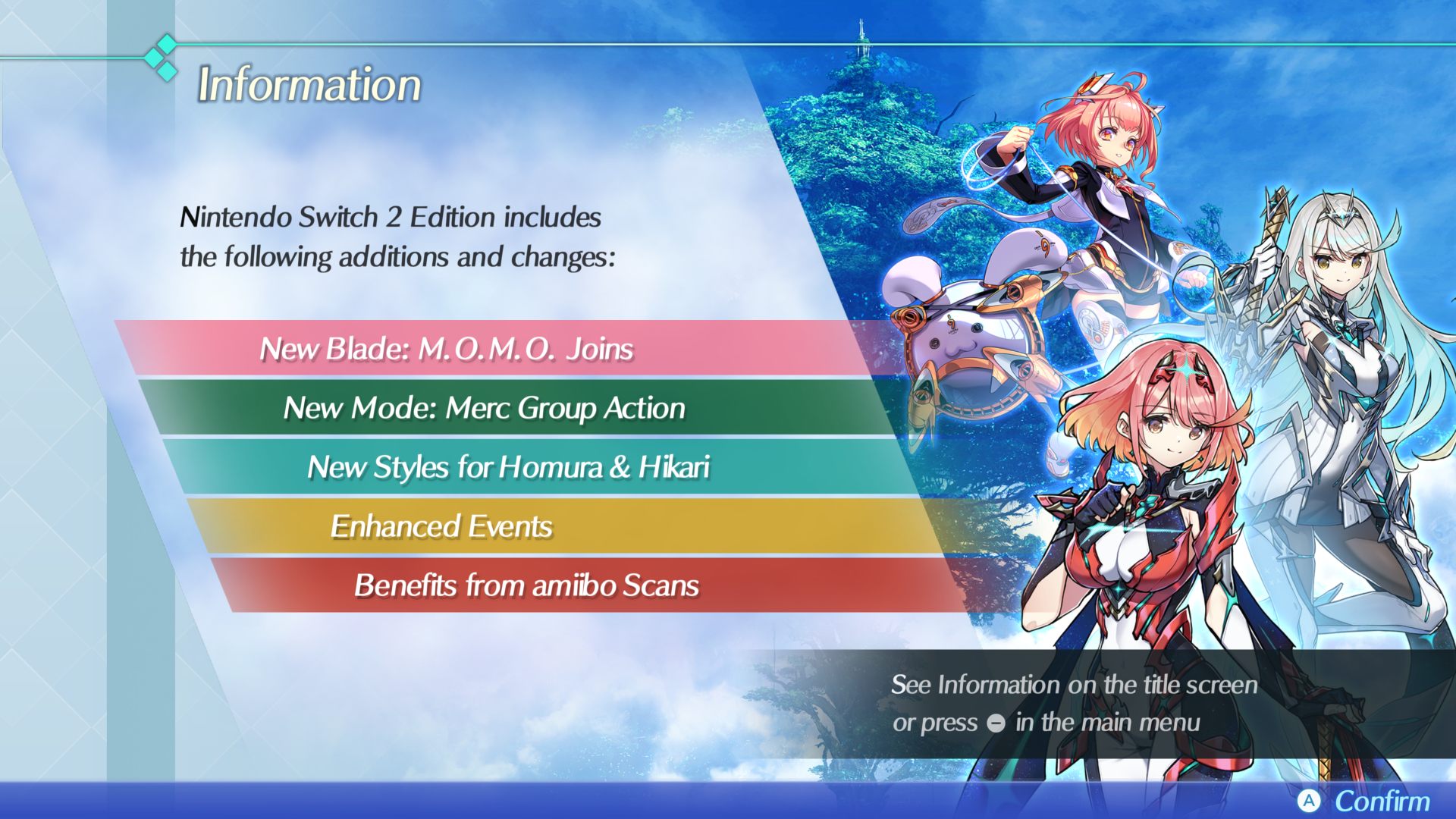
The purpose of this patch is to follow the original Japanese version of Xenoblade 2, not to preserve the Western localization where it conflicts with it.
Names, terminology, characterization, cultural references, jokes, religious material and story details are restored or corrected whenever the localization changed, replaced, simplified or removed them. The patch does not try to make the game more "Western", more "accessible", or more familiar to players of the official English release. That already exists. This project exists specifically to provide the opposite. An English version that respects what was actually written in Japanese.
Natural English still matters. The goal is not stiff word-for-word translation or Japanese sentence structure copied directly into English. The meaning, tone, characterization and concrete information of the Japanese text come first; the English is then written naturally without rewriting the source into something else.
Japanese cultural elements are not removed merely because they may be unfamiliar to a Western player. Honorifics are preserved. Genuine foreign-language names and words used by the Japanese script are preserved where appropriate.
This philosophy is not up for debate. Feedback about mistakes, missed details, technical problems, better readings of the Japanese text or places where the patch itself is inconsistent is welcome. Requests to restore localization rewrites simply because they are familiar from the official English release are outside the scope of the project.
What the Patch Changes
Dialogue, Story and Side Content
Names, Attacks, Enemies and Terminology
Battle, System Text and Tutorials
Nopon dialogue follows the way Nopon actually speak in the Japanese script rather than the speech style invented for the Western localization.
Localization-only constructions such as Grampypon, Unclepon, biggipon/littlepon, brotherpon/sisterpon and similar invented -pon forms are not used unless the Japanese itself calls for such a form. The localization's forced broken English, automatic third-person self-reference and habit of inserting generic "friends" into Nopon dialogue are likewise absent where they have no counterpart in the original text.
At the same time, the patch does not flatten Nopon speech into ordinary English. Their actual speech patterns, characteristic sentence endings, verbal quirks, sounds and individual ways of speaking are preserved wherever they occur in Japanese.
The same principle applies to characterization throughout the game: characters retain their original forms of address, honorifics, recurring expressions, nicknames and differences in register instead of having those distinctions rewritten or standardized for the Western localization.
Important Restored Terminology
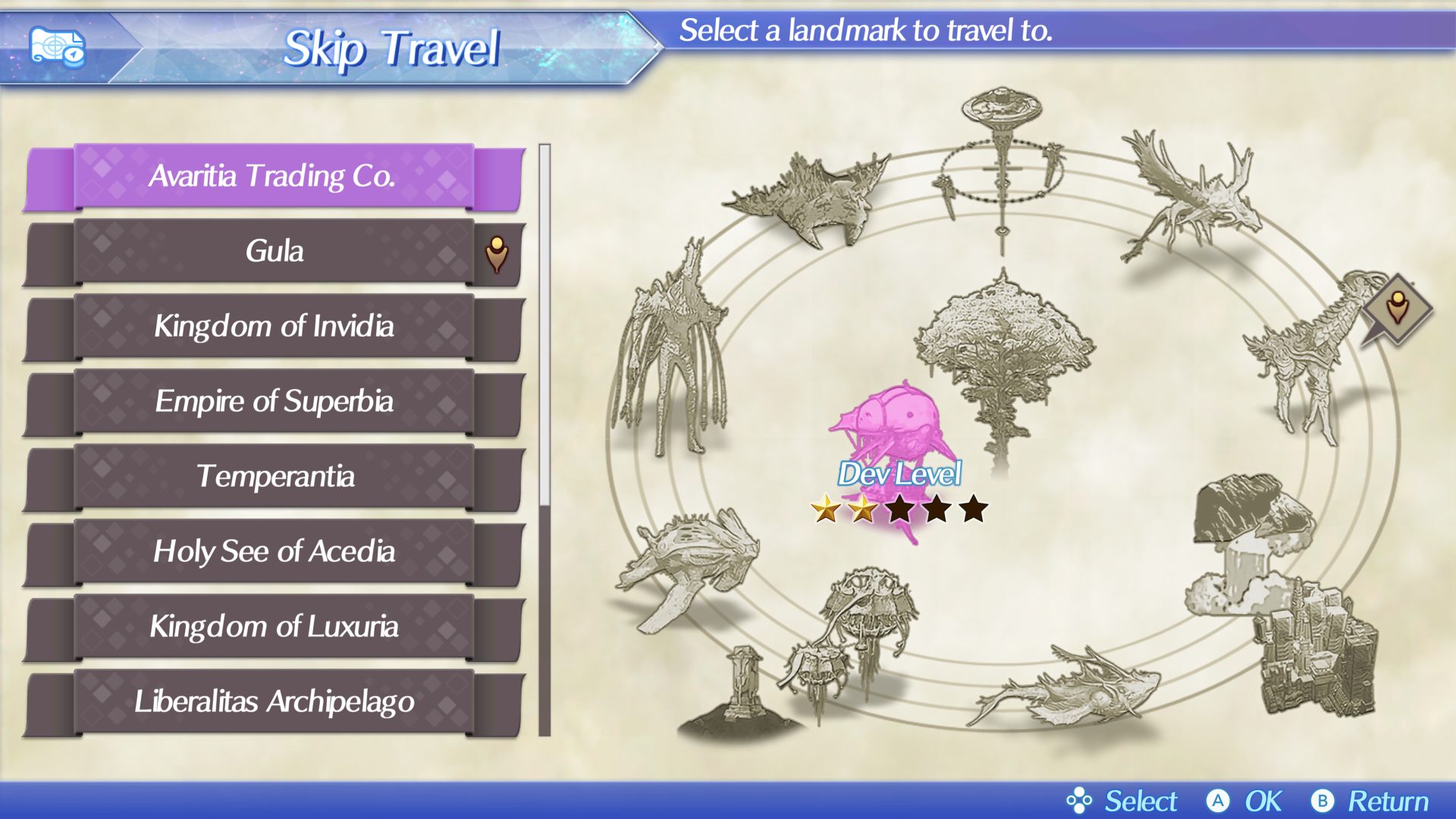
- 巨神獣 → Divine Beast, rather than "Titan". 巨神獣 literally refers to a giant divine beast, and the game itself connects them directly to the theological structure of the setting.
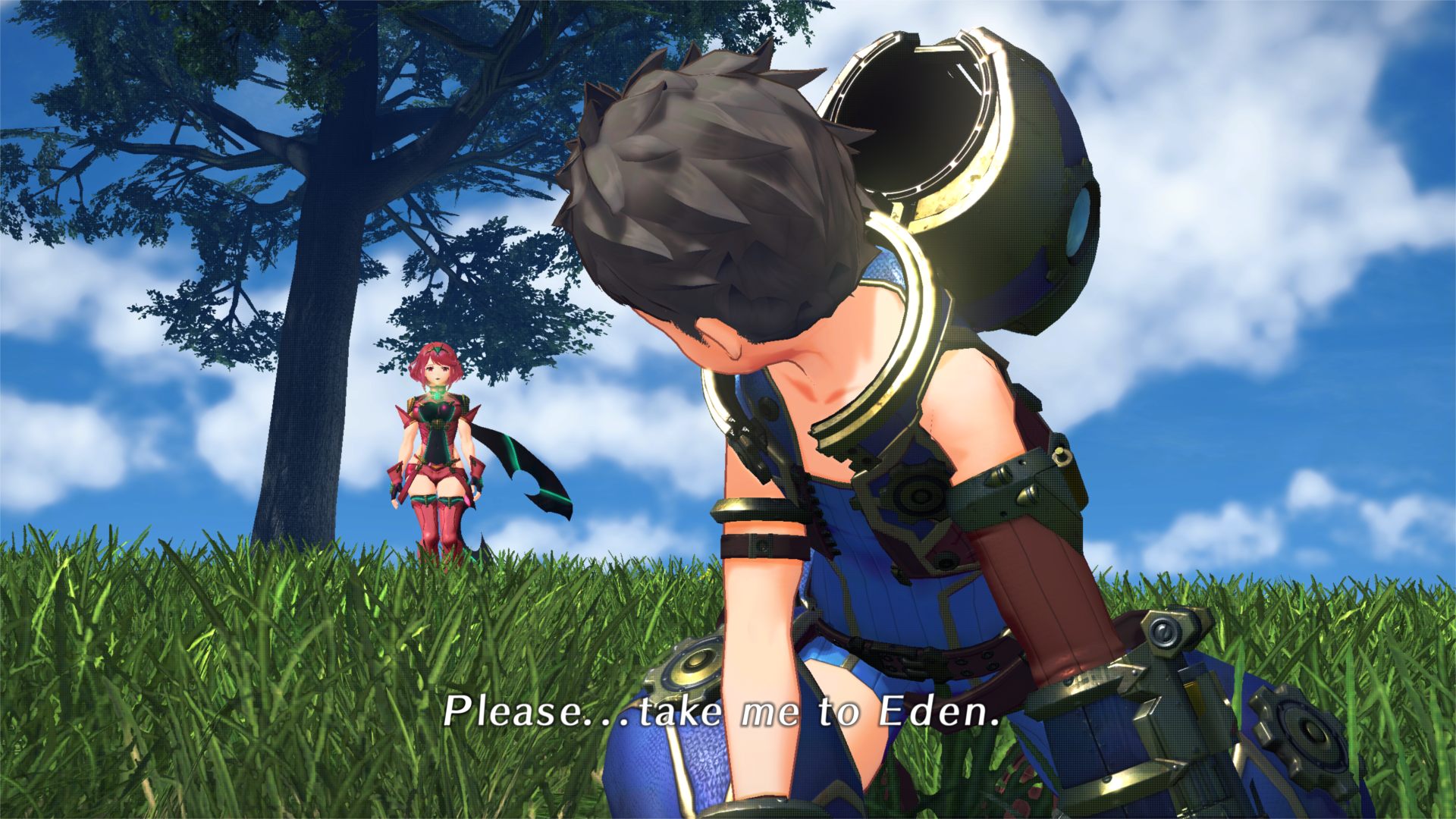
- 楽園 → Eden, used consistently rather than the localization's Elysium/Paradise mixture.
- Bonding Talk, rather than "Heart-to-Heart".
- Torigo, rather than "Trigo".
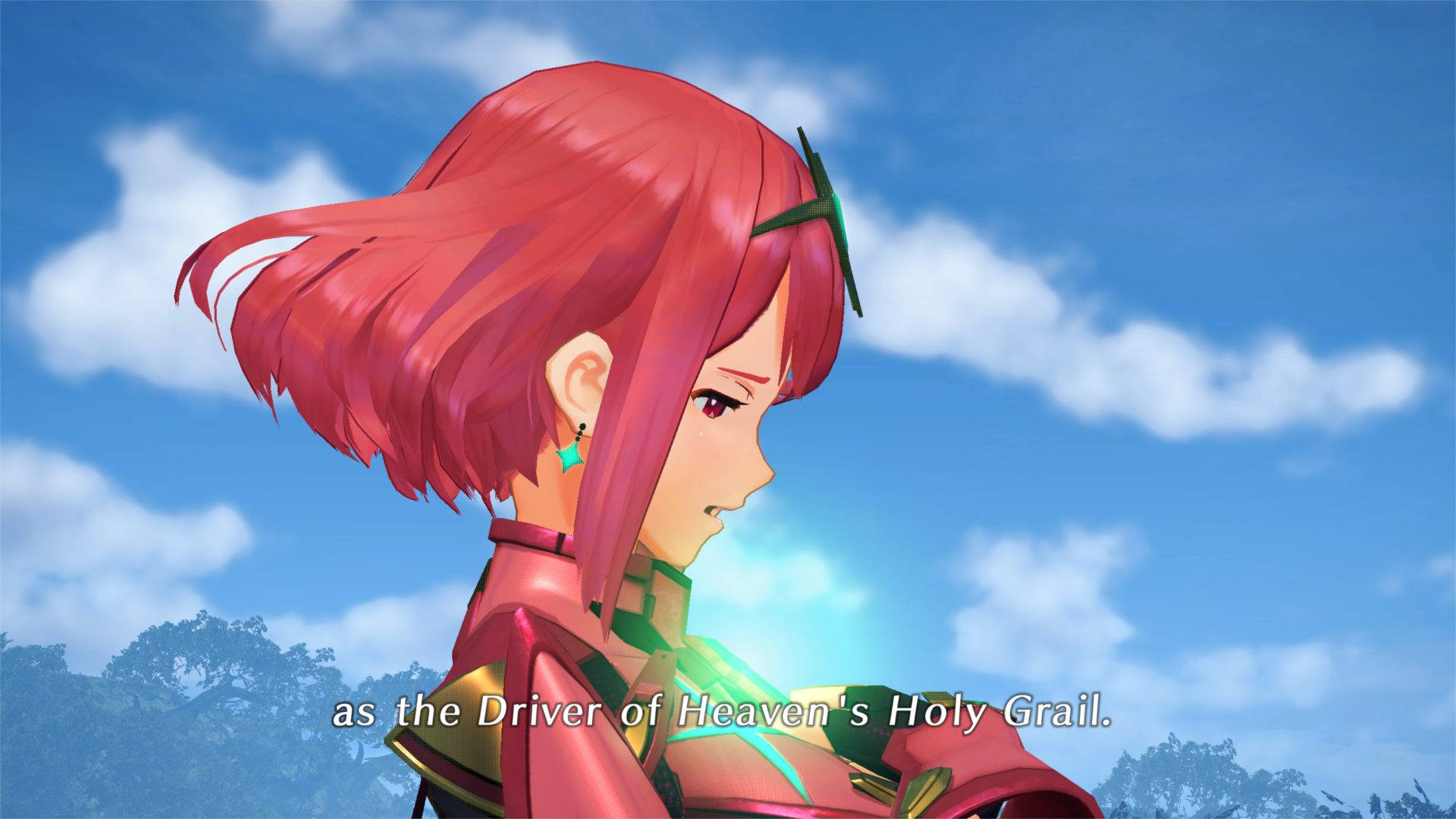
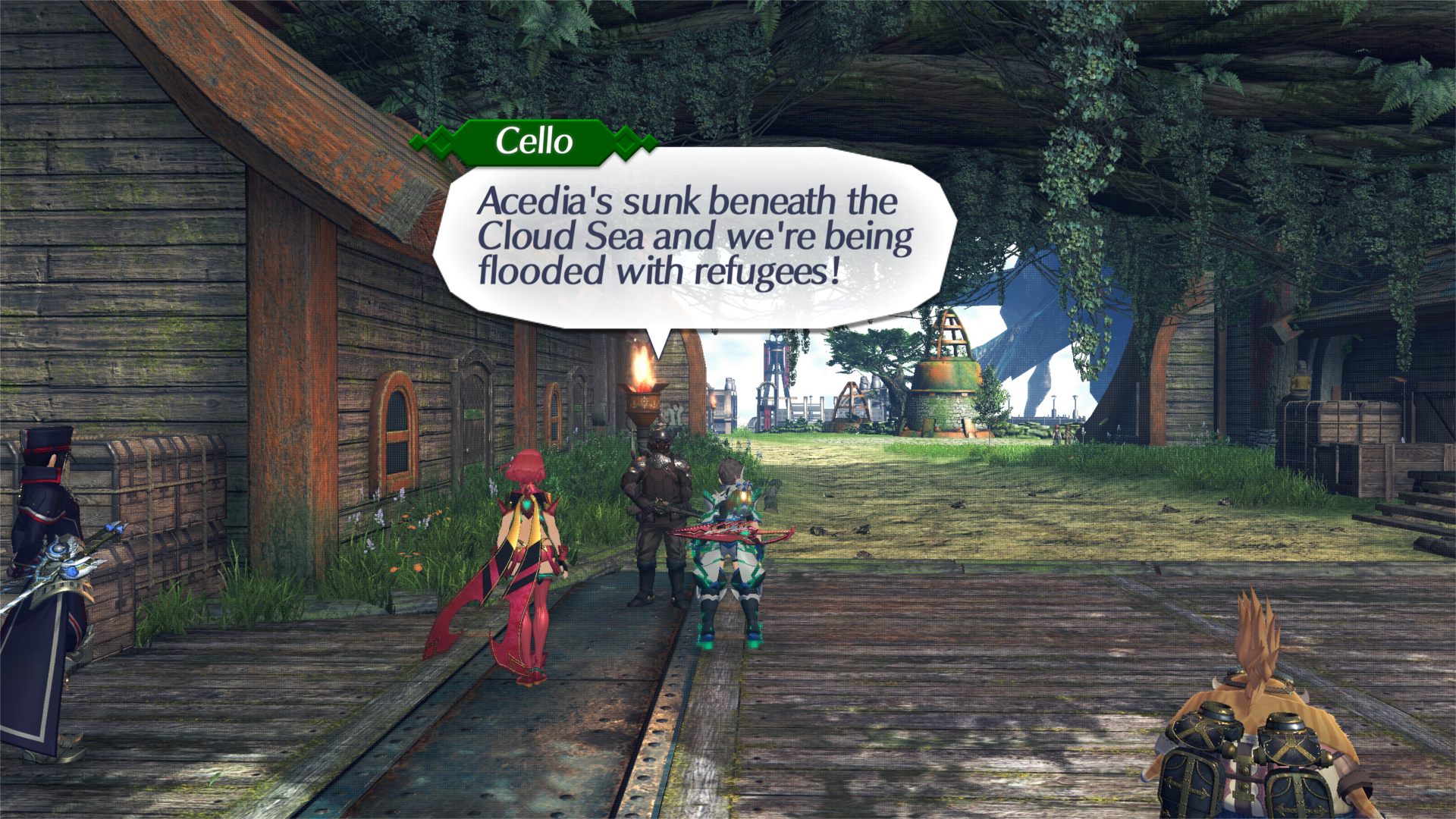
- Pope / Holy See, rather than Praetor / Praetorium.
- Man-Eater (マンエーター), rather than Flesh Eater.
- Down / Rising, following the terminology actually used by the Japanese game.
- Assist Core and Blade Resonance, Core Baptism used consistently across the game.
- Nia's original characterization of Zeke, including the turtle-themed nicknames and wordplay, has been restored.
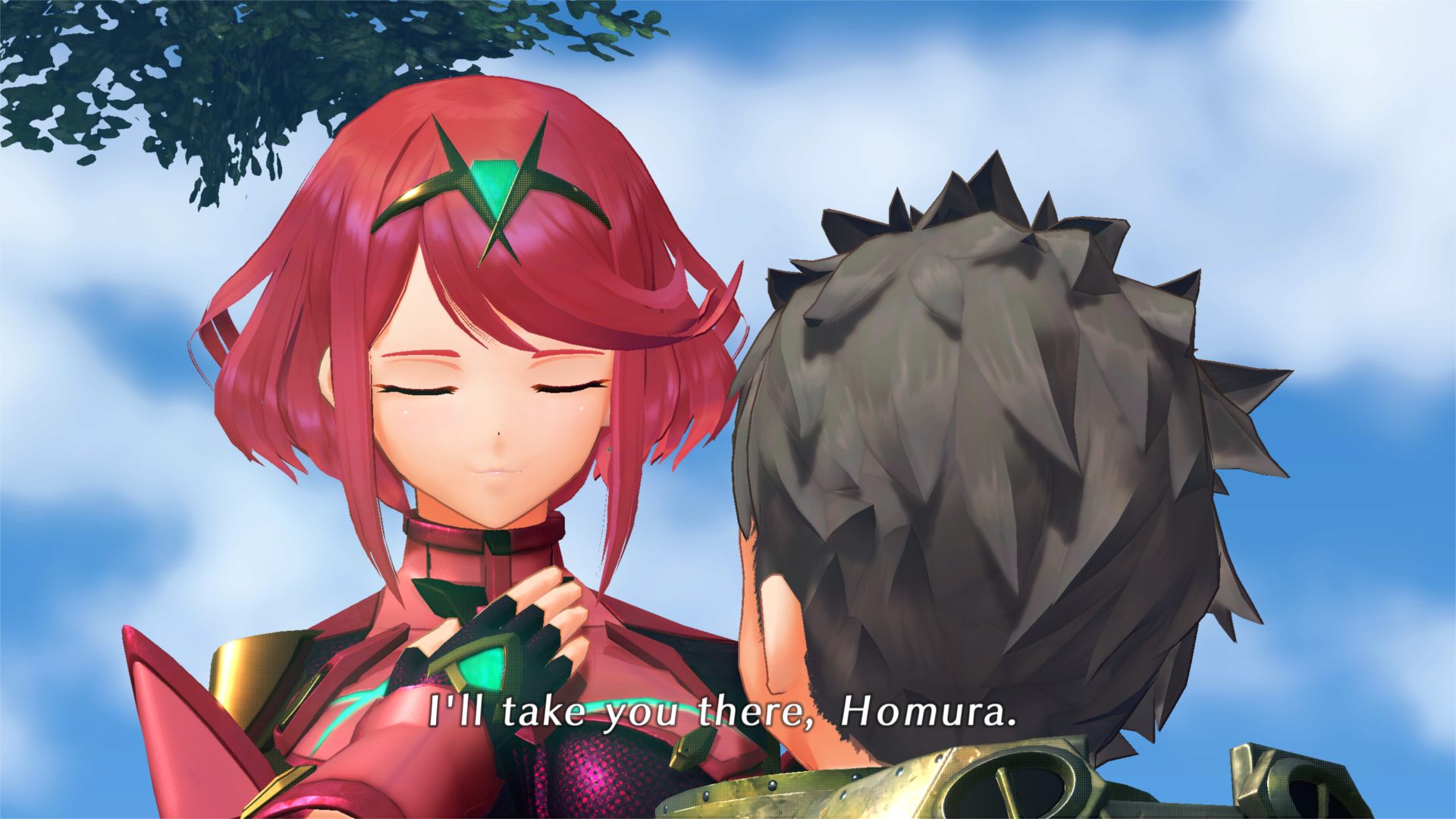
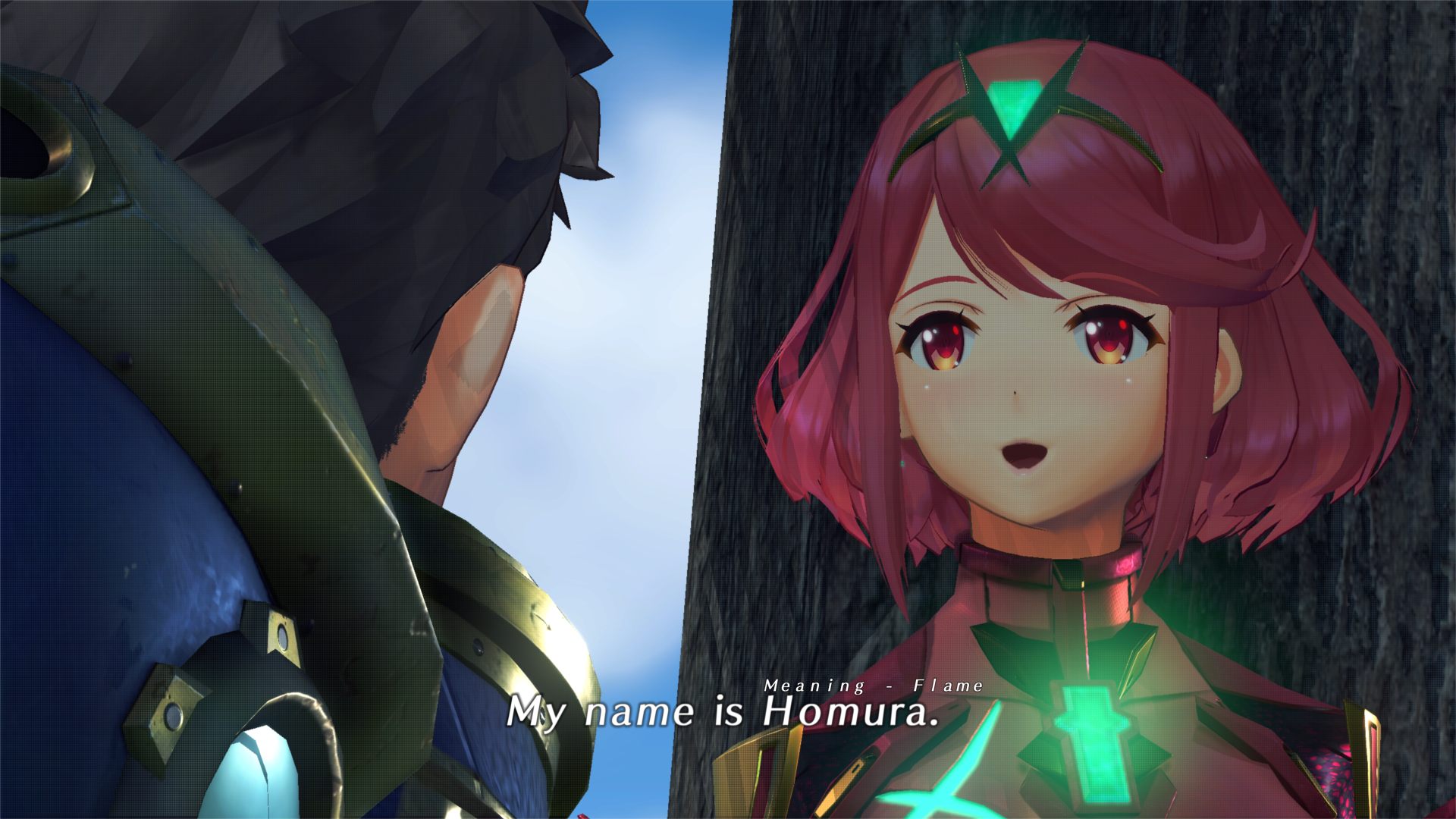
- Original Japanese honorifics such as -san, -sama, -chan and -kun are preserved where the Japanese uses them. In Xenoblade 2 they frequently carry characterization and are part of scenes built around Japanese and otaku culture, so removing them changes more than simple politeness level.
Project Origins
I first experienced Xenoblade 2 through the Japanese version shortly after the Western release, so my understanding of its characters, story and lore came from the original Japanese presentation rather than the localization. Years later, revisiting the game became an opportunity to build on earlier delocalization work and push the restoration much further.
The technical side required reliable tools for Monolith Soft's BDAT format, along with a workflow for comparing, searching and editing thousands of game records. At this point the project represents several hundred hours of work, including translation, research, consistency checks, tooling, testing and repeated revisions across the game.
Technical Notes
The patch works through normal Switch romfs mod folders. It uses BDAT files from the Japanese version.
This also means:
- The game displays the original Xenoblade 2 logo in menus.
- The control guide menu remains in Japanese. This does not affect normal gameplay.
The game has many different interface and text-box limits. Text has been adjusted where necessary to avoid truncation while preserving meaning; these limits are not treated as one universal character count because different UI surfaces have different available space.
The Furigana / Ruby Text System
The Japanese game uses ruby/furigana-style text for more than simple pronunciation. In some places it creates a second layer of meaning by displaying one word while instructing the player to read it as another.
For example:
The visible text uses 僕, while the ruby reading is "Device", adding information about how the speaker understands his own role.
Another important example is:
The displayed word is 神 (God), while the intended reading is とうさま (father). The choice of とうさま is itself meaningful characterization, especially when contrasted with another character using the much rougher おやじ for the same person.
The patch preserves this system because these layered readings can carry lore, characterization and cultural information that disappears if the ruby layer is discarded.
Installation
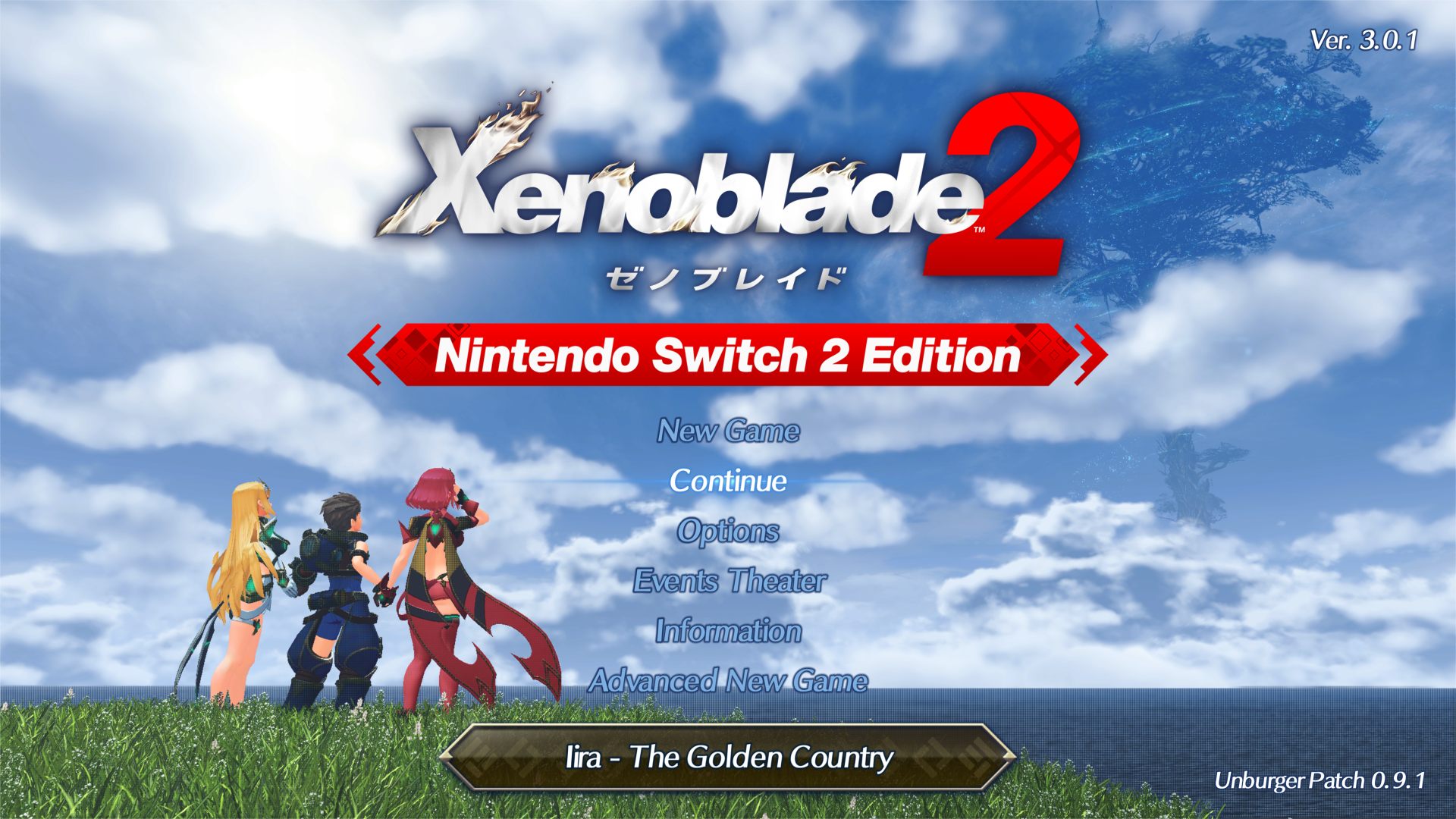
Install the patch like any other Switch romfs mod. The current version is compatible with game version 3.0.1
BEFORE STARTING THE GAME, SET THE LANGUAGE TO JAPANESE IN THE EMULATOR'S GAME SETTINGS. On the Switch 2, you'll likely need to set the console language to Japanese for the game to launch in that language, since there's no CFW available yet. In the future, I’ll consider forcing this via a patch in the game’s executable file.
Translation Comparison Examples
A few examples of how named scenes differ between the Japanese script, the official localization and the patch:
A complete comparison of the script is available here. However, the content for the Switch 2 version is not yet included here.
Companion Xenoblade Wiki Userscript
An optional Tampermonkey / Violentmonkey userscript is available as a separate download. It replaces localized character names, location names, terminology and other text across many of the most commonly used Xenoblade wikis so they match the patch.
This makes those wikis much easier to use while playing, without constantly having to translate localized names back into the names used by the patch.
Development Tools and GitHub
Two Python tools were developed for the project:
1. A BDAT extraction/repacking tool for managing game files.
2. A translation assistant that displays Japanese and translated text side by side and supports searching and editing the game's script.
- BDAT Tool
- Translation Assistant
- Patch GitHub
Contributing and Bug Reports
Useful contributions include:
- Bug reports and crashes.
- Typos, missing punctuation and text-overflow problems.
- Translation errors or missing information compared with the Japanese script.
- Localized names or terminology that were overlooked.
- Japanese-language research relevant to names, lore, characterization or cultural references.
- General testing and feedback from people actually using the patch.
When reporting a translation issue, Japanese-source evidence is especially useful. The official English localization is not treated as the authority for translation decisions in this project.
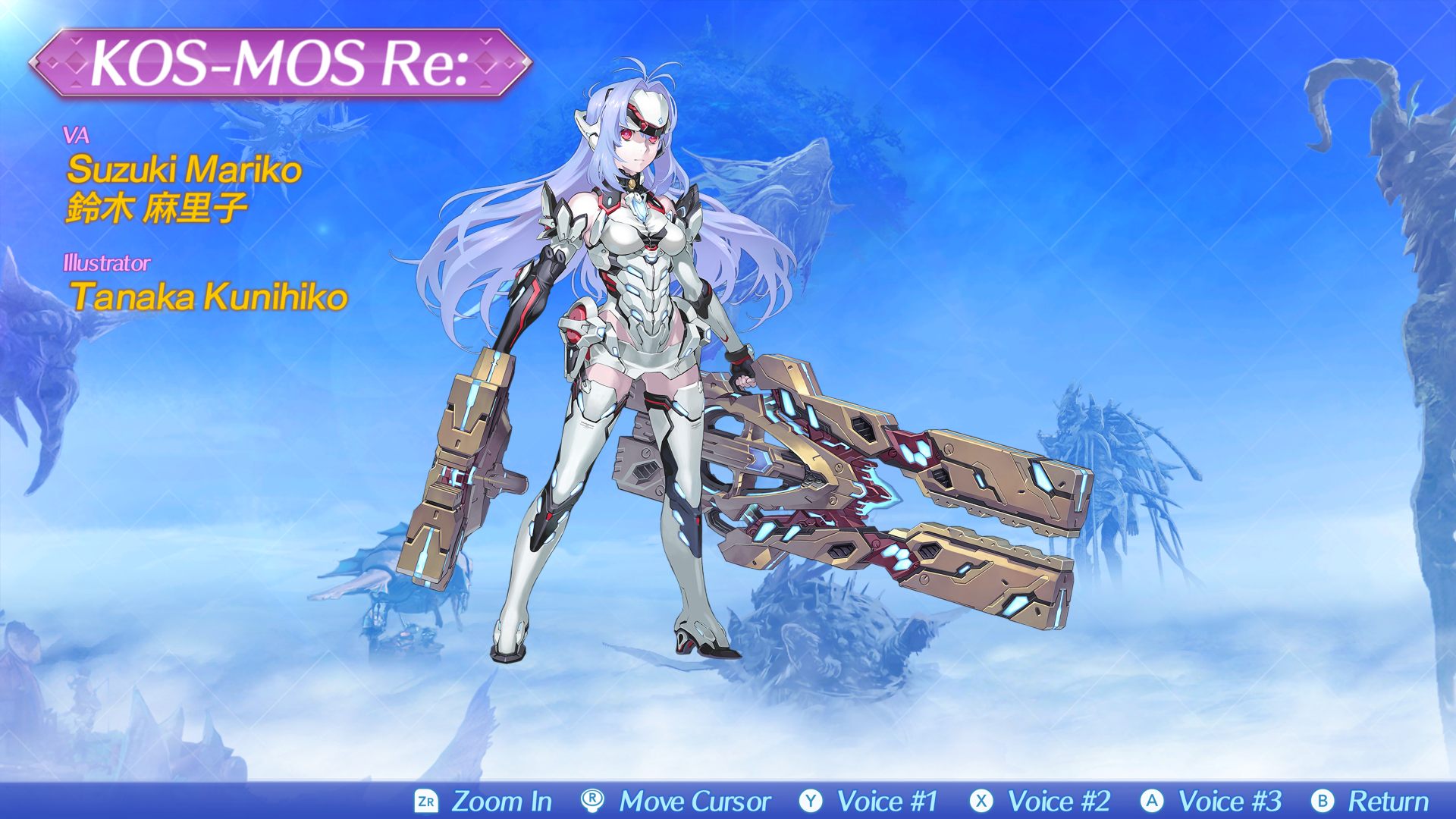
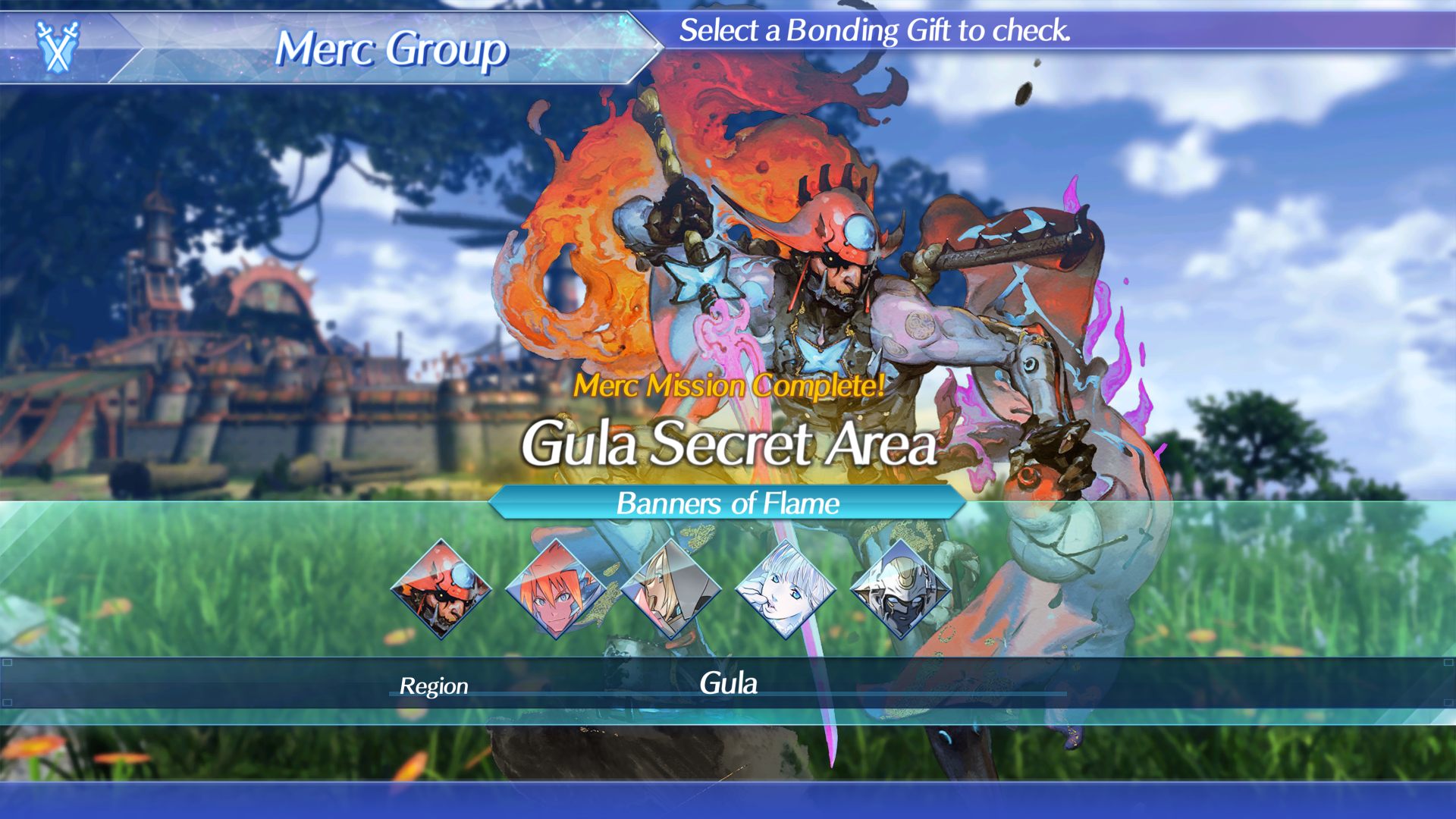
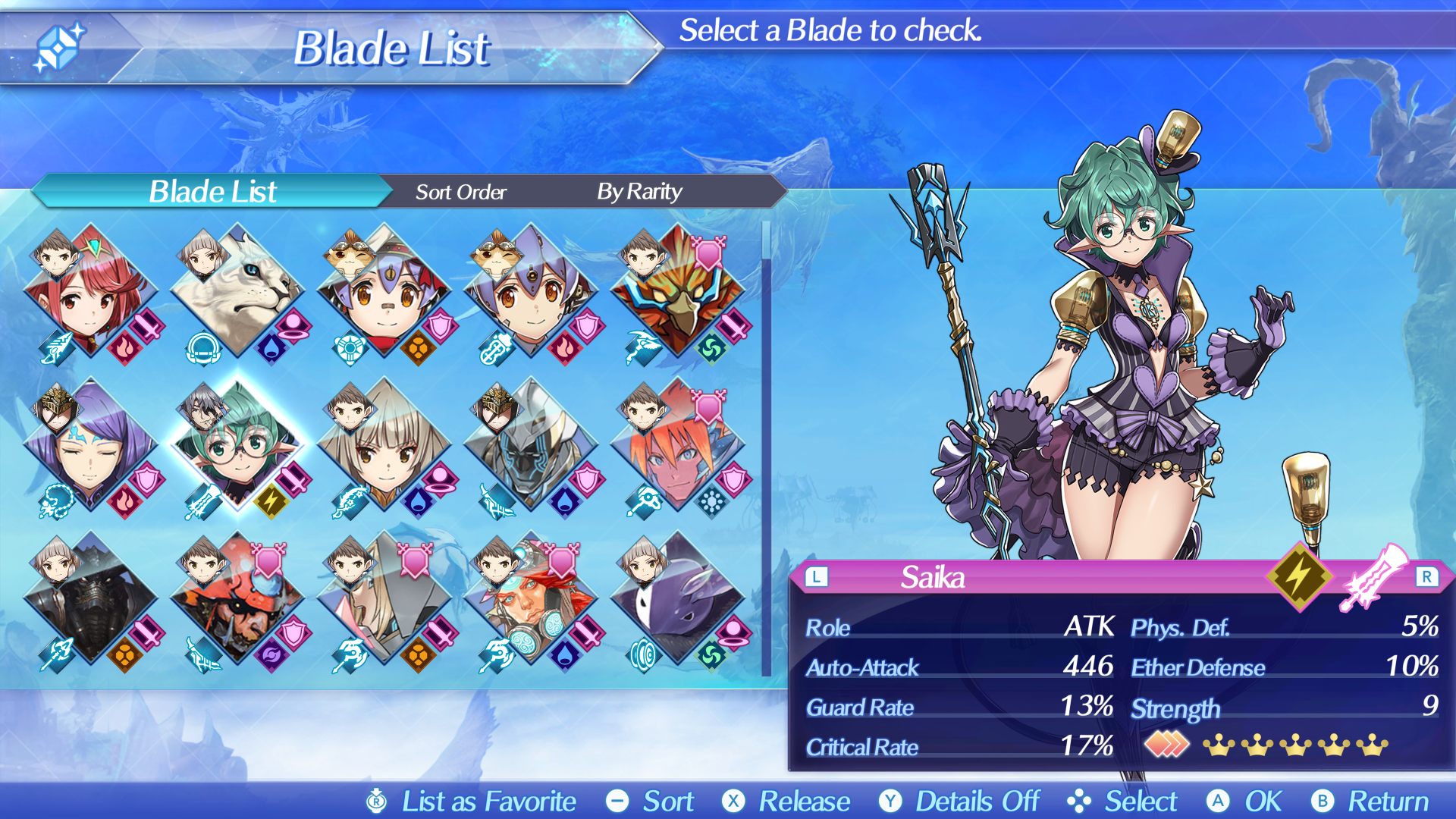
This patch brings the English version of Xenoblade 2 much closer to the original Japanese game. It restores names and terminology, corrects mistranslated or rewritten dialogue, preserves honorifics and cultural references, and removes localization changes that altered characterization, lore, jokes, terminology or the meaning of the original text.
The work now covers the main story, Iira, regular and mini quests, Blade Quests, Bonding Talks, inn scenes, field and NPC dialogue, tutorials, battle and system text, character and NPC names, enemy names, locations, weapons, attacks, skills, items and many other parts of the game.
Changes can be followed through the project's GitHub commits and release changelogs.
What's Different from the Switch 1 Patch?
Around 98% of the game's scripts are almost identical to the Switch 1 version, so the existing translations could be carried over directly. All newly added dialogue, item names, attack names, and other new text have been translated from scratch using the Japanese script, rather than relying on the official English localization.The technical side, however, was considerably more complicated.
The western Switch 1 release didn't include Japanese, which left an unused language slot that made replacing BDAT files through LayeredFS relatively straightforward. The Switch 2 Edition includes Japanese from the start, and the game prioritizes the BDAT files stored inside its own archives. Simply placing translated files in the Japanese language folder no longer works.
Getting around this required reverse-engineering the game's file-loading routines and developing an IPS patch that redirects Japanese BDAT requests to a separate folder in LayeredFS. If a replacement file isn't present, the game falls back to its original data.
The downside is that this modification is tied to the game's executable, meaning future updates will require a corresponding IPS patch. Unlike the Switch 1 version, the translation files alone aren't enough. But there's also a positive side - the game includes a Japanese video for the ending cutscene, which was missing from the Western version of Switch 1. Because of this, you don't need to copy it separately into the patch folder.
Switch 2 emulation is also still highly experimental, so I haven't been able to test every part of the game. I've tested the patch as extensively as the current emulators allow, though, and everything I've been able to check has worked as intended.
Core Philosophy
The purpose of this patch is to follow the original Japanese version of Xenoblade 2, not to preserve the Western localization where it conflicts with it.
Names, terminology, characterization, cultural references, jokes, religious material and story details are restored or corrected whenever the localization changed, replaced, simplified or removed them. The patch does not try to make the game more "Western", more "accessible", or more familiar to players of the official English release. That already exists. This project exists specifically to provide the opposite. An English version that respects what was actually written in Japanese.
Natural English still matters. The goal is not stiff word-for-word translation or Japanese sentence structure copied directly into English. The meaning, tone, characterization and concrete information of the Japanese text come first; the English is then written naturally without rewriting the source into something else.
Japanese cultural elements are not removed merely because they may be unfamiliar to a Western player. Honorifics are preserved. Genuine foreign-language names and words used by the Japanese script are preserved where appropriate.
This philosophy is not up for debate. Feedback about mistakes, missed details, technical problems, better readings of the Japanese text or places where the patch itself is inconsistent is welcome. Requests to restore localization rewrites simply because they are familiar from the official English release are outside the scope of the project.
What the Patch Changes
Dialogue, Story and Side Content
- The entire game, including Iira: The Golden Country, has been retranslated from the original Japanese script.
- This includes the complete main story, voiced and unvoiced scenes, regular quests, mini quests, Blade Quests, Bonding Talks, inn scenes, field dialogue, NPC dialogue, tutorials, DLC content and other text throughout the game.
- The translation follows the meaning, characterization and intent of the Japanese script rather than the rewritten dialogue of the Western localization. Information removed from the official English version has been restored, while additions and rewritten characterization that were not present in Japanese have been removed.
- The English has been written to read naturally rather than mechanically copying Japanese sentence structure.
- Japanese forms of address and honorifics are preserved throughout the game, together with differences in how individual characters speak to and refer to one another.
Names, Attacks, Enemies and Terminology
- The patch uses the original names from the Japanese script throughout the game, replacing names and designations invented or altered for the Western localization.
- This includes characters, NPCs, enemies and monsters, regions, cities, landmarks, facilities, organizations, quests, weapons, items, Arts, attacks, Blade and Driver skills, and other named elements throughout the main game and Iira: The Golden Country.
- Japanese personal names follow their original order, and romanization is kept consistent throughout the game, including long vowels where appropriate, such as Menou rather than "Meno".
- Names and terms that are deliberately written in another language in the Japanese version retain that identity instead of being replaced with unrelated English localization names. This includes English, German, Italian, French and other foreign-language elements used throughout the game.
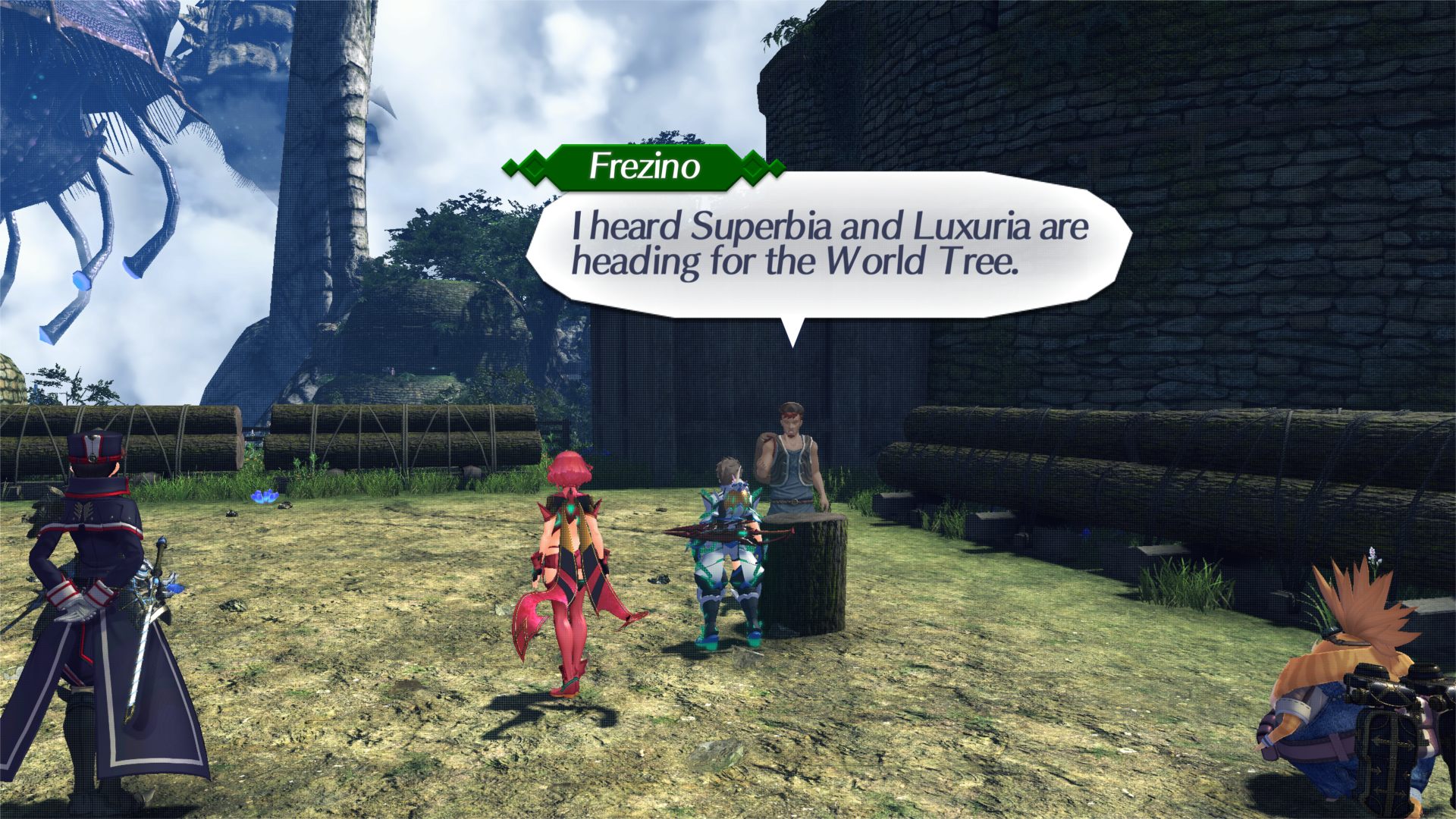
- The World Tree floors use their original Talmudic names — Vilon, Rakia, Shehaqim and Zebul — rather than the replacement names created for the Western localization.
- Hana's transformation names are restored to their original forms, including Judgement Day (JD) instead of "Quantum Technochampion".
- Core terminology follows the Japanese game consistently across dialogue, menus and gameplay text. This includes Divine Beast instead of "Titan", Eden instead of "Elysium", Bonding Talk instead of "Heart-to-Heart", Man-Eater instead of "Flesh Eater", Down/Rising instead of "Topple/Launch", and Pope/Holy See instead of "Praetor/Praetorium".
Battle, System Text and Tutorials
- Battle and system text is translated from the Japanese rather than retaining the rewritten terminology and descriptions of the Western localization.
- Arts, attacks, Blade and Driver skills, status effects, buffs, battle mechanics, equipment effects and other gameplay descriptions use the terminology and meaning of the original game.
- Mechanical descriptions preserve the actual conditions and effects stated in Japanese, including activation requirements, damage conditions, Recast effects, reactions, elemental orbs, Party Gauge usage and other battle systems.
- The game's tutorials have been retranslated from the Japanese, covering battle mechanics, progression systems, Blade mechanics, Chain Attacks, Specials, Driver Combos, Challenge Battle and the other systems explained throughout the game.
- Terminology remains consistent between tutorials, menus, battle text, skill descriptions and other parts of the interface instead of using different names for the same mechanic in different places.
- Where the interface has limited space, text is adjusted to fit the game's actual UI constraints while preserving the same meaning and terminology used elsewhere.
Nopon dialogue follows the way Nopon actually speak in the Japanese script rather than the speech style invented for the Western localization.
Localization-only constructions such as Grampypon, Unclepon, biggipon/littlepon, brotherpon/sisterpon and similar invented -pon forms are not used unless the Japanese itself calls for such a form. The localization's forced broken English, automatic third-person self-reference and habit of inserting generic "friends" into Nopon dialogue are likewise absent where they have no counterpart in the original text.
At the same time, the patch does not flatten Nopon speech into ordinary English. Their actual speech patterns, characteristic sentence endings, verbal quirks, sounds and individual ways of speaking are preserved wherever they occur in Japanese.
The same principle applies to characterization throughout the game: characters retain their original forms of address, honorifics, recurring expressions, nicknames and differences in register instead of having those distinctions rewritten or standardized for the Western localization.
Important Restored Terminology
- 巨神獣 → Divine Beast, rather than "Titan". 巨神獣 literally refers to a giant divine beast, and the game itself connects them directly to the theological structure of the setting.
- 楽園 → Eden, used consistently rather than the localization's Elysium/Paradise mixture.
- Bonding Talk, rather than "Heart-to-Heart".
- Torigo, rather than "Trigo".
- Pope / Holy See, rather than Praetor / Praetorium.
- Man-Eater (マンエーター), rather than Flesh Eater.
- Down / Rising, following the terminology actually used by the Japanese game.
- Assist Core and Blade Resonance, Core Baptism used consistently across the game.
- Nia's original characterization of Zeke, including the turtle-themed nicknames and wordplay, has been restored.
- Original Japanese honorifics such as -san, -sama, -chan and -kun are preserved where the Japanese uses them. In Xenoblade 2 they frequently carry characterization and are part of scenes built around Japanese and otaku culture, so removing them changes more than simple politeness level.
Project Origins
I first experienced Xenoblade 2 through the Japanese version shortly after the Western release, so my understanding of its characters, story and lore came from the original Japanese presentation rather than the localization. Years later, revisiting the game became an opportunity to build on earlier delocalization work and push the restoration much further.
The technical side required reliable tools for Monolith Soft's BDAT format, along with a workflow for comparing, searching and editing thousands of game records. At this point the project represents several hundred hours of work, including translation, research, consistency checks, tooling, testing and repeated revisions across the game.
Technical Notes
The patch works through normal Switch romfs mod folders. It uses BDAT files from the Japanese version.
This also means:
- The game displays the original Xenoblade 2 logo in menus.
- The control guide menu remains in Japanese. This does not affect normal gameplay.
The game has many different interface and text-box limits. Text has been adjusted where necessary to avoid truncation while preserving meaning; these limits are not treated as one universal character count because different UI surfaces have different available space.
The Furigana / Ruby Text System
The Japanese game uses ruby/furigana-style text for more than simple pronunciation. In some places it creates a second layer of meaning by displaying one word while instructing the player to read it as another.
For example:
The visible text uses 僕, while the ruby reading is "Device", adding information about how the speaker understands his own role.
Another important example is:
The displayed word is 神 (God), while the intended reading is とうさま (father). The choice of とうさま is itself meaningful characterization, especially when contrasted with another character using the much rougher おやじ for the same person.
The patch preserves this system because these layered readings can carry lore, characterization and cultural information that disappears if the ruby layer is discarded.
Installation
Install the patch like any other Switch romfs mod. The current version is compatible with game version 3.0.1
BEFORE STARTING THE GAME, SET THE LANGUAGE TO JAPANESE IN THE EMULATOR'S GAME SETTINGS. On the Switch 2, you'll likely need to set the console language to Japanese for the game to launch in that language, since there's no CFW available yet. In the future, I’ll consider forcing this via a patch in the game’s executable file.
Translation Comparison Examples
A few examples of how named scenes differ between the Japanese script, the official localization and the patch:
A complete comparison of the script is available here. However, the content for the Switch 2 version is not yet included here.
Companion Xenoblade Wiki Userscript
An optional Tampermonkey / Violentmonkey userscript is available as a separate download. It replaces localized character names, location names, terminology and other text across many of the most commonly used Xenoblade wikis so they match the patch.
This makes those wikis much easier to use while playing, without constantly having to translate localized names back into the names used by the patch.
Development Tools and GitHub
Two Python tools were developed for the project:
1. A BDAT extraction/repacking tool for managing game files.
2. A translation assistant that displays Japanese and translated text side by side and supports searching and editing the game's script.
- BDAT Tool
- Translation Assistant
- Patch GitHub
Contributing and Bug Reports
Useful contributions include:
- Bug reports and crashes.
- Typos, missing punctuation and text-overflow problems.
- Translation errors or missing information compared with the Japanese script.
- Localized names or terminology that were overlooked.
- Japanese-language research relevant to names, lore, characterization or cultural references.
- General testing and feedback from people actually using the patch.
When reporting a translation issue, Japanese-source evidence is especially useful. The official English localization is not treated as the authority for translation decisions in this project.